UNFPA Warns Liberia Risks Losing 2027 Family Planning Supplies Over Delayed Compact Signing
MONROVIA, Liberia — The United Nations Population Fund (UNFPA) has warned that Liberia risks losing access to UNFPA-funded contraceptive commodities in 2027 if the government fails to sign its Supplies Partnership Country Compact in a timely manner.
The warning came during a technical consultation convened in Monrovia by UNFPA and the Government of Liberia to finalize the agreement, which is expected to strengthen family planning services, improve the availability of contraceptives and promote sustainable domestic financing for reproductive health commodities.
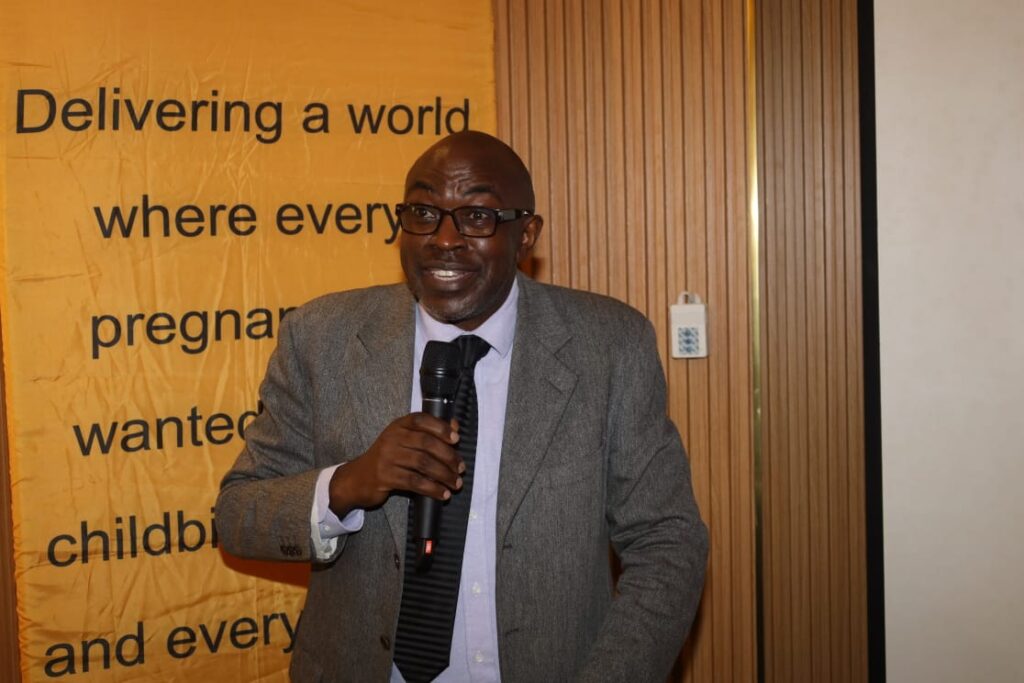
Opening the consultation, UNFPA Deputy Representative Dr. Leonard Kamugisha said Liberia is among the countries that have yet to finalize and sign the compact, putting the country behind others in the process.
He explained that the UNFPA Supplies Partnership is overseen by a steering committee comprising contributing United Nations member states, which is scheduled to meet this month to recommend whether countries without signed compacts should continue receiving commodities funded through the partnership in 2027.
“That’s not a decision that we can make here in Liberia,” Dr. Kamugisha cautioned, emphasizing the urgency of completing the agreement to prevent the country from being excluded.
He clarified that the Supplies Partnership Country Compact is separate from the Family Planning 2030 Compact, although both are linked in efforts to achieve national family planning targets.
Family planning seen as an economic investment
Dr. Kamugisha urged the Ministry of Finance and Development Planning to view family planning not merely as a health intervention but also as an investment in Liberia’s economic growth and development.
Citing economic evidence, he said every US$1 spent on modern contraceptive services saves US$2.48 in direct public health costs and generates US$8.40 or more in broader social and economic benefits.
He linked the investment to Liberia’s high youth dependency ratio, arguing that improved access to family planning could help families build wealth, strengthen productivity and expand the government’s revenue base.
“If you are not able to grow your personal and family wealth, the Ministry of Finance and LRA cannot tax you,” he said, referring to the Liberia Revenue Authority.
He added that limited revenue growth constrains the government’s ability to increase spending across critical sectors, including health.
Despite some progress in contraceptive use, Dr. Kamugisha highlighted significant gaps in access to reproductive health services across the country.
According to figures presented at the consultation:
- Contraceptive prevalence increased from 19 percent in 2013 to 24 percent in 2019–2020.
- Only 16 percent of adolescent girls use modern contraceptive methods.
- Unmet need for family planning stands at approximately 33 percent nationally and 47 percent among adolescents.
- Nearly 25 percent of service delivery points lack seven essential maternal and reproductive health medicines, according to the 2024 Reproductive Health Commodity Security Survey.
- More than 30 percent of maternal deaths in Liberia occur among adolescent girls and young women.
Dr. Kamugisha stressed that expanding access to family planning could help prevent unintended pregnancies and reduce exposure to pregnancy-related health risks.
He said the proposed compact would help integrate family planning into national budget frameworks, gradually increase domestic financing for contraceptive commodities, establish mechanisms to prevent stockouts and incorporate family planning into the essential package of health services.
He also congratulated the Ministry of Finance on domestic revenue exceeding US$1 billion for the first time, describing the achievement as an important milestone that could support increased investment in essential services.
Development partners call for action beyond commitments
Representing development partners, Aminata Kamara-Sneh, Country Focal Person for the Swedish Association for Sexuality Education (RFSU), acknowledged progress in family planning but said major challenges continue to limit access to services.
She identified teenage pregnancy, shortages of contraceptive supplies, affordability barriers, stigma against marginalized populations, a shortage of trained counselling providers and heavy dependence on external funding as persistent concerns.
Kamara-Sneh said financial hardship forces some women and families to prioritize basic necessities over family planning services.
“You have to make a decision between having food and taking family planning,” she said.
She also expressed concern over the lack of a sustainable government-led initiative to finance family planning through the national budget.
According to her, stakeholders must move beyond policy commitments and develop practical measures that translate promises into accessible services.
“We look past commitments and come up with very practical action plans,” she said, describing the proposed compact as an important step toward addressing the challenges.
She called for coordinated efforts to ensure that every pregnancy is planned and wanted.
Civil society urges government to avoid delays
Leo E. Tiah, Executive Director of the Youth Network for Positive Change (YUNETPO), raised concerns about the implications of limited family planning access for Liberia’s predominantly young population.
Tiah said he was alarmed by the figures on unmet need, particularly the reported 47 percent among adolescents.
“One in two want to access services, but the services are not available,” he said.
He urged the government and development partners to expedite the compact’s finalization, warning that any delay could worsen existing challenges if Liberia loses access to the commodities.
“Please don’t delay this because it will cause more problems if we delay and if Liberia is left out,” Tiah said. “Please speed up the process and make sure that we are included, that Liberia can benefit.”
Health Ministry reaffirms commitment
Nunta K. Abasion-Nuaho, Acting Director of the Family Health Division at the Ministry of Health, reaffirmed the ministry’s commitment to improving women’s reproductive health outcomes.
She said adequate supplies, combined with public awareness, would strengthen the delivery and utilization of family planning services across the country.
“If we have enough family planning commodities and the awareness created, we can do more to improve women of reproductive age health outcomes,” she said.
Abasion-Nuaho also called for family planning services to receive clear recognition and adequate funding in the national budget, stressing the importance of ensuring that services reach women and families nationwide.
She delivered greetings on behalf of the Minister of Health.
Finance Ministry pledges support
Speaking on behalf of the Minister of Finance and Development Planning, Wah W. Joe Sr., a UN Data Analyst in the ministry’s Aid Management Unit, reaffirmed the ministry’s commitment to aligning family planning priorities with Liberia’s national development agenda.
He encouraged stakeholders to use the technical consultation to develop practical, coordinated and sustainable measures to strengthen family planning services.
Joe also thanked UNFPA for its continued partnership with the Liberian government.
Compact expected to advance for endorsement
The technical consultation is expected to produce a final draft of the UNFPA Supplies Partnership Country Compact for endorsement by the Ministers of Finance and Health.
The document will subsequently be submitted to the leadership of the UNFPA Supplies Partnership in New York for endorsement.
The outcome could have significant implications for Liberia’s ability to secure contraceptive commodities in 2027, particularly as stakeholders push for stronger domestic financing, improved supply chains and expanded access to reproductive health services.
With the international partnership’s review approaching, government officials, development partners and civil society representatives are urging Liberia to complete the process without further delay.
About The Author