“Advocacy For Women’s Leadership Must Not Be Symbolic” FeJAL’s President Asserts

February 24, 2026
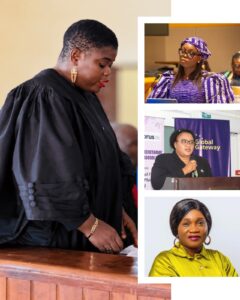
Monrovia: The Female Journalist Association of Liberia President has emphasized that advocacy for women’s leadership must not be symbolic. According to Lisa Tenneh Diasay, leadership transitions within public institutions, particularly must meet clear standards of transparency, fairness, and procedural integrity.
The FeJAL’s President made the comment on her official facebook page after the spokesperson of Liberia National Police, Madam Cecelia Clarke resigned from the force citing persistent workplace discrimination, operational constraints, limited institutional support, structural barriers affecting the performance of her office, and difficulties in team collaboration as key reasons for stepping down during press conference at LNP headquarters.
Madam Clarke was informed a day before her resignation by police administration that she was being relieved of her post due to the end of her tour of duty and reassigned to head the Protocol Division backed by a communication dated February 17, 2026 instructing her to turn over all working materials and report to her immediate supervisor for briefing and resumption of duty.
Weeks before she resigned, the LNP spokesperson madam Clarke wrote on her official facebook page “The LNP has one spokesperson and that mandate is my office to uphold, stop the undermining misrepresentation and stereotyping that you are noted for my silence is not stupidity”
Commenting on madam Clarke, FeJAL’s President said Globally accepted public service standards require that transfers of officers, especially those in technical or leadership roles be preceded by documented performance appraisal, Clear justification grounded in institutional needs. Evidence of merit-based decision-making and Protection from arbitrary or retaliatory reassignment.
She said transfers should not appear punitive, politically influenced, or procedurally unclear without access to official transfer letter. Madam Diasay noted that leadership transitions within public institutions, particularly the Liberia National Police must meet clear standards of transparency, fairness, and procedural integrity. “It is in the spirit of institutional strengthening, not confrontation, questions must be raised regarding the recent transfer process of madam Clarke.
The Fejal’s said Prior to madam Clarke’s resignation, she reportedly raised concerns about being undermined and it was not happening outside the glare of the police leadership, something she said created an unfavorable working environment and raises critical institutional questions such as
Were her complaints formally investigated? Was mediation or internal review initiated? Were safeguards applied to prevent retaliation? Emphasizing that No professional should be expected to remain in an environment where they feel undervalued, obstructed, or systematically weakened. “If concerns were raised and not addressed, the issue is not individual, it is structura”.
“Dear Cecelia Clarke, you outstandingly performed during your stay in the role as 122. We’re proud of the kind of work you did there; Your leadership, professionalism, and commitment to duty were visible and impactful. Wishing you all the best” FeJAL’s added.
Madam Diasay “It is acknowledged that the LNP, under the leadership of Inspector General Gregory Coleman, operates within a structured code of ethics standards for our men and women in the police force the principle of “duty before complaint” emphasizes discipline and hierarchy, however, discipline does not eliminate the obligation to follow due process a command structure must still document reasons for transfers, protect officers from workplace hostility and ensure fairness regardless of rank or gender”
Fejal’s noted that women appointed to leadership roles are there because of competence and merit and their presence should not expose them to disproportionate scrutiny, obstruction, or internal resistance. She said Liberia has made commitments both domestically and internationally to promote women in leadership and decision-making roles in the area of Gender, Leadership, and Institutional Responsibility “Our Advocacy for women’s leadership must not be symbolic and must be supported by an internal review mechanism for officers who report hostile work environments and development of standardized transfer and reassignment protocols within the LNP (if not in place already) .
According to Diasay, If female leaders are transferred or resign under pressure without transparent explanation, it undermines public confidence and discourages future participation saying “we cannot ignore Liberia’s Commitment to International Standards, Liberia is bound by international best practices in governance, including commitments under regional and global frameworks promoting
Safe working environments, protection from intimidation or harassment, equal professional standards applied fairly, merit-based, public service gender equality in leadership protection from workplace harassment and Transparent administrative processes.
“Liberia must continue striving toward systems where professionals regardless of gender can perform effectively, free from intimidation, and evaluated strictly on competence and performance.
Importantly, this moment presents an opportunity not for division but for institutional strengthening” Lisa Diasay said, “We respectfully request the following; clear protections against retaliation for officers who raise professional concerns transparency is not an attack on leadership, it is protection for the institution”.
If the LNP intends to build public trust, clarity must replace speculation, Accountability must replace silence. Procedure must replace perception. She said Madam Clarke’s service deserves appreciation, the institution she served deserves integrity and Liberia deserves systems that uphold fairness, merit, and justice for all, “we will fix Liberia everyday with our ideas”.
About The Author