UN Women Report Calls for Urgent Investment in Care Economy as Liberia’s Unpaid Care Burden Limits Women’s Economic Opportunities
By Laymah Kollie
MONROVIA, July 20, 2026 — A new report launched by UN Women Liberia is calling for urgent national action to recognize, reduce and redistribute unpaid care work, warning that Liberia’s failure to invest in care systems is limiting women’s economic opportunities and undermining the country’s broader development prospects.
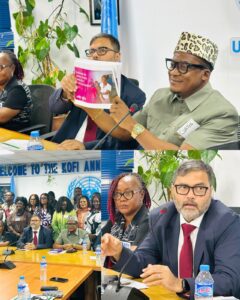
The Liberia Care Snapshot Report 2026 was officially launched on Thursday, July 16, at the Kofi Annan Conference Room of the United Nations building in Monrovia, bringing together representatives of the Government of Liberia, civil society organizations, the private sector, development partners, academia and the international community.
The event marked a significant milestone in Liberia’s efforts to make unpaid care work more visible, measurable and valued while advancing policies that support women’s economic empowerment and inclusive national development.
The report examines both paid and unpaid care work, including childcare, household responsibilities, care for older persons and people living with disabilities, as well as the broader systems, policies, infrastructure and services needed to support caregivers and care recipients.
It finds that women in Liberia spend more than twice as much time on unpaid care and domestic work as men, although the overall time spent and the gender gap remain lower than global and sub-Saharan African averages. The report, however, warns that the relatively lower time women spend on unpaid care work should not be interpreted as evidence of gender equality.
Instead, the report identifies what it calls a “care-poverty-labour paradox.”
Liberia has one of the highest female labor force participation rates in the world, at 77 percent in 2024. Yet more than 90 percent of women are engaged in vulnerable employment, while informality affects 94 percent of women compared to 79 percent of men.
The report says poverty and economic pressure force many women to enter the labor market, often in informal and low-quality jobs, leaving them with less time for unpaid care responsibilities. At the same time, the country’s limited care infrastructure and services leave significant unmet care needs in families and communities.
The report estimates that Liberian women contributed approximately US$1.08 billion in market-based economic output in 2020, in addition to an estimated US$530 million through unpaid care and domestic work.
It further states that closing gender gaps in labor force participation and improving job quality could increase Liberia’s Gross Domestic Product by as much as 23.7 percent, while investments in childcare and eldercare could increase GDP by up to 19.3 percent.
Launching the report, Deputy Minister for Research, Policy and Planning at the Ministry of Gender, Children and Social Protection, Curtis V. Dorley, described the publication as more than a report, calling it a policy roadmap for Liberia’s future.
“This report reflects a national commitment to making care visible, measurable, valued, and investable,” Deputy Minister Dorley said.
He noted that for generations, women and girls have carried a disproportionate share of unpaid care responsibilities, including raising children, caring for older persons and persons with disabilities, preparing meals, collecting water and fuel, and performing other essential household tasks.
“Yet without care, there is no productive workforce, no healthy society, and no sustainable development,” he added.
Deputy Minister Dorley said Liberia is now part of a broader regional movement involving ten West and Central African countries, including Liberia, Ghana, Nigeria, Senegal, Côte d’Ivoire, Cameroon, the Democratic Republic of Congo, Mali, Niger and Togo.
He said the regional Care Snapshot initiative provides governments, policymakers, development partners, investors, researchers and women entrepreneurs with evidence to understand the care economy and develop reforms.
According to him, the report demonstrates that unpaid care work is not merely a private household matter, but an issue connected to economic policy, social protection, employment, infrastructure, climate resilience and human capital development.
“Care is not a social cost. Care is a productive investment,” Deputy Minister Dorley emphasized, citing the report’s finding that addressing gender gaps in labor force participation linked to unpaid care responsibilities could increase Liberia’s GDP by an estimated 23.7 percent.
He called for investments in quality childcare services, social protection, water and sanitation, clean energy, care infrastructure and support for older persons and persons with disabilities.
He also urged the adoption of family-friendly workplace policies, improved care data and the recognition of unpaid care work in national development planning and budgeting.
“As Deputy Minister responsible for Research, Policy and Planning, I firmly believe that sound public policy begins with credible evidence. This report is therefore not only a diagnostic assessment; it is a policy roadmap,” Dorley said.
He further called on government ministries, agencies and commissions to treat care as a whole-of-government and whole-of-society agenda.
“No single ministry can build an effective care system alone. It requires coordinated leadership, cross-sectoral collaboration, sustained investment, reliable data, and political will,” he said.
The UN Women Liberia Representative, Abul Hasnat Monjurul Kabir, said the launch represented an important milestone in the country’s efforts to advance gender equality, women’s economic empowerment and inclusive development.
He said the invisibility of women’s care work remains one of the major challenges facing development globally, warning that economic growth cannot be truly inclusive if the contribution of women who provide unpaid care remains unrecognized.
“Care is not only a social issue, it’s a development issue, it’s an economic issue, and a national policy priority as well,” Kabir said.
The report shows that Liberia’s population, estimated at 5.7 million in 2025, is projected to grow to approximately nine million by 2050. The growing population and an increase in the number of older persons are expected to place additional pressure on the country’s care systems.
Kabir said the report also highlights major gaps in childcare, healthcare, water and sanitation, electricity, transportation and social protection services.
He noted that Liberian women contribute an estimated US$530 million annually through unpaid care and domestic work, in addition to more than US$1 billion in market-based economic output.
“These two figures are so powerful, yet so invisible,” he said, questioning why such contributions have not received greater attention in national policy and planning.
Kabir said strategic investment in childcare, eldercare and other care services could stimulate economic growth, create decent jobs, reduce poverty and expand opportunities for women and families across Liberia.
“Investing in care is therefore not necessarily only a challenge. It is also an opportunity. It is a smart investment that might yield substantial social and economic reform and progress and returns,” he said.
UN Women is urging Liberia and other stakeholders to take action guided by five principles: recognizing, reducing, redistributing, rewarding and representing care work and care workers.
The approach calls for recognizing the value of unpaid care work; investing in infrastructure and services to reduce the burden of care; promoting shared responsibility among households, communities and institutions; ensuring decent working conditions and protection for paid care workers; and including caregivers and care recipients in decision-making processes.
The Liberia Care Snapshot identifies several priority areas for action, including the development of a national care roadmap, the integration of care into national and sectoral planning, improved care data and regular time-use surveys.
It also calls for investments in piped water, electricity, sanitation and public transportation to reduce the time women and girls spend on labor-intensive household responsibilities.
Other recommendations include expanding childcare services, strengthening care for older persons and people with disabilities, improving social protection, promoting shared caregiving responsibilities between women and men, adopting family-friendly workplace policies and strengthening protections for paid domestic and care workers.
The report also recommends the professionalization of the care sector through training, certification and career pathways, while encouraging increased financing from government, private investors, development partners and other stakeholders.
The launch was attended by officials from the Ministry of Gender, Children and Social Protection, the Ministry of Mines and Energy, the Liberia Institute of Statistics and Geo-Information Services, the Ministry of Commerce and Industry, civil society organizations, private sector representatives, development partners, women’s groups, academia and other stakeholders.
The UN Women Representative expressed appreciation to the Government of Liberia, development partners, civil society organizations, researchers and care advocates who contributed to the report, as well as the governments of Norway and Sweden for their support.
He urged stakeholders to move beyond awareness and use the report’s findings to build a comprehensive and inclusive care system.
“The future of Liberia’s economic transformation and gender equality agenda depends on how we value, support and invest in care,” Kabir said.
For Liberia, the report makes clear that unpaid care work is no longer an issue that can remain invisible within households and communities. As the country pursues its development agenda, the report argues that investment in care must be treated as an investment in jobs, economic growth, gender equality and the country’s future.
About The Author