Can Liberia Preserve Its Cultural Heritage Without Harmful Traditional Practices?
By: Laymah Kollie
Samuel K. Doe Sports Complex, Paynesville | 3 August 2026
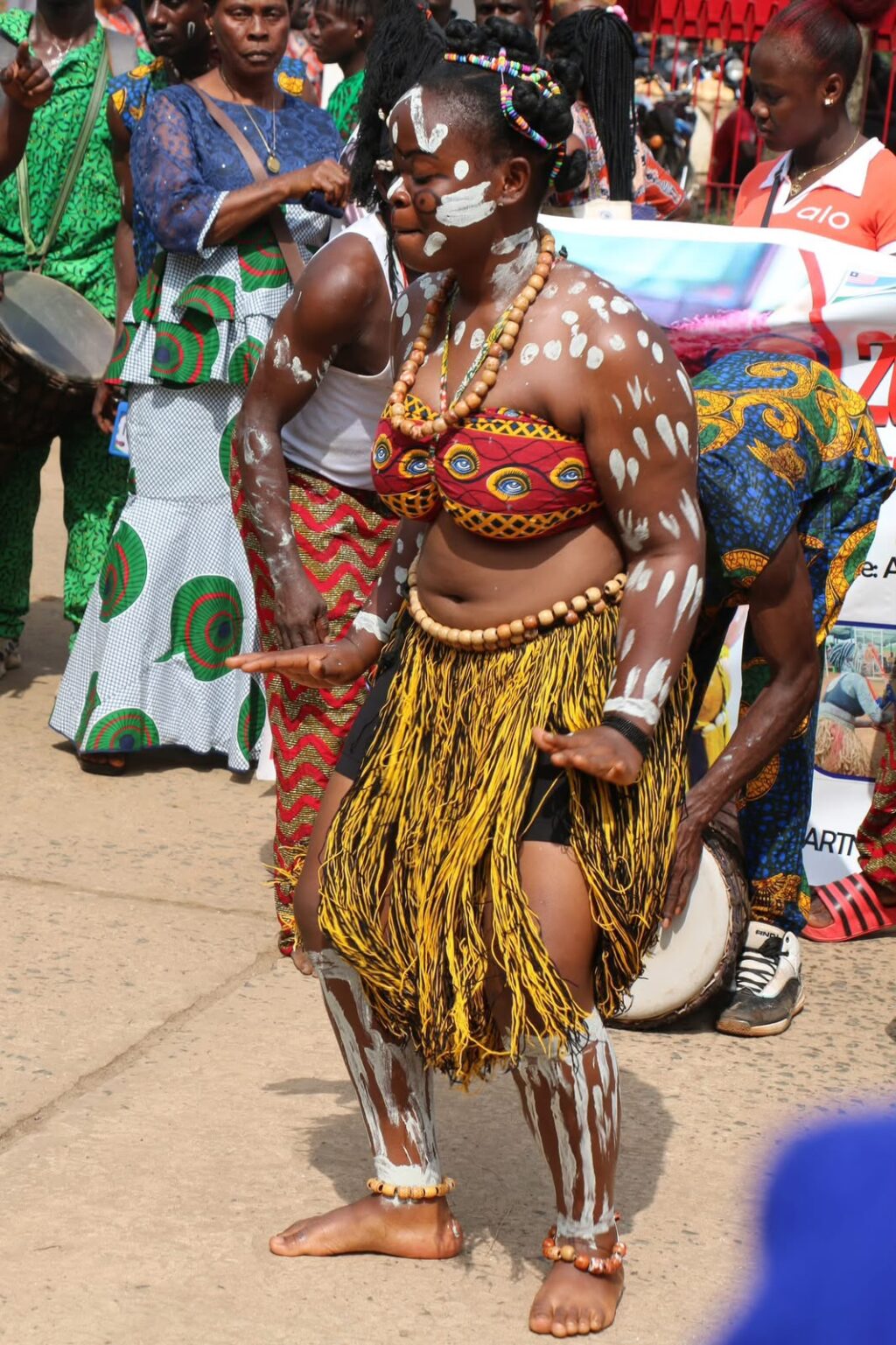
The beating of traditional drums echoed through the streets of Paynesville as thousands of Liberians, dressed in colorful traditional attire, marched from ELWA Junction to the Samuel K. Doe Sports Complex. Dancers, musicians, artisans, traditional leaders, women, youth, and cultural groups from across the country came together to celebrate Liberia’s rich cultural diversity during the 2026 National Cultural Festival.
Yet beyond the livelyv performances and cultural displays, the festival also became a national platform for one of Liberia’s most important conversations: Can the country preserve its cultural heritage while permanently ending harmful traditional practices such as female genital mutilation (FGM)?
The debate comes at a critical moment. As Liberia considers the future of policies addressing harmful traditional practices, many Liberians are weighing the need to preserve cultural identity alongside the constitutional rights, health, dignity, and protection of women and girls.
A Festival Celebrating Culture Beyond Harm
Organized by ActionAid Liberia in collaboration with DOMAFEIGN, LIWEN, WOCDAL, NATPAH, and SAIL, with support from the Embassy of Sweden, this year’s National Cultural Festival was held under the theme:
“Our Culture, Our Pride: Empowering Women and Girls.”
The festival formed part of ActionAid Liberia’s Just and Equal Communities (JEC) Project, which works with communities to preserve positive cultural values while promoting gender equality and eliminating harmful practices affecting women and girls.
Now in its third year, the festival has grown into one of Liberia’s leading cultural events, bringing together traditional authorities, government institutions, development partners, civil society organizations, youth groups, women’s organizations, artisans, and community representatives from across the country.
Throughout the day, Liberia’s cultural richness was on full display.
Traditional dance troupes demonstrated farming techniques through Kpelle cultural performances. Fisherfolk reenacted traditional fishing practices. Women showcased weaving, pottery, basket making, and indigenous crafts that have sustained families for generations. County delegations from Grand Gedeh, Gbarpolu, Margibi, Montserrado, and several other counties performed traditional songs, dances, storytelling, and drumming, illustrating that Liberia’s cultural identity extends far beyond any single traditional practice.
The atmosphere became even more energetic when renowned Cultural Ambassador Kerkula Kamara performed the popular Liberian classic Malawaya-Balawala, drawing thousands of spectators onto their feet in celebration.
For many participants, the festival demonstrated that Liberia possesses a unique and rich cultural heritage rooted in language, music, storytelling, craftsmanship, agriculture, traditional governance, communal solidarity, and indigenous knowledge passed from one generation to another.
The National Debate
While the festival celebrated culture, discussions among government officials, traditional leaders, development partners, and civil society organizations focused on a question increasingly shaping national discourse:
Does ending harmful traditional practices threaten Liberia’s cultural heritage?
Some traditional leaders have argued that restrictions on certain traditional initiation practices amount to an erosion of Liberian culture.
Human rights organizations, women’s groups, and development partners, however, contend that culture is dynamic and should evolve by preserving traditions that promote unity and identity while abandoning practices that endanger health, dignity, and human rights.
The discussion has become particularly significant as Liberia approaches important national decisions regarding harmful traditional practices.
Culture Evolves, Says Swedish Ambassador
Speaking during the festival, Sweden’s Ambassador to Liberia and Sierra Leone, Karl Backéus, challenged the perception that ending harmful traditional practices means abandoning Liberia’s culture.
“I sometimes hear the argument that doing away with harmful traditional practices is taking away Liberia’s culture, but we all know that is not true. Today we have seen so much of Liberia’s beautiful culture, and Liberians are rightly proud of it.”
The Ambassador said the day’s celebration clearly demonstrated that culture is expressed through many positive traditions, including music, dance, arts, crafts, language, and community values.
He further emphasized that cultures naturally evolve over time.
“It is important to recognize that traditions change over time. Twenty years ago, many believed only men could become Presidents in Africa. Liberia showed the world that traditions can evolve by electing Africa’s first female President.”
According to Ambassador Backéus, preserving culture does not require preserving practices that deny people equal rights or place their health and wellbeing at risk.
Understanding the Debate Around FGM
One of the most debated harmful traditional practices in Liberia is female genital mutilation (FGM), which is commonly associated with initiation into the Sande Society, a long-established traditional women’s institution in several counties.
While many Liberians regard the Sande Society as an important institution for cultural education, leadership, discipline, and community identity, human rights advocates distinguish these cultural teachings from the practice of FGM itself.
The World Health Organization (WHO) states that FGM has no health benefits and can result in severe immediate and lifelong physical, psychological, and reproductive health complications.
International human rights organizations, including UNICEF and UN Women, have consistently advocated for the elimination of FGM while encouraging communities to preserve positive cultural traditions that do not involve physical harm.
The discussion in Liberia therefore increasingly focuses not on abolishing culture, but on separating valuable cultural teachings from practices considered harmful.
Liberia’s Legal Landscape
The national conversation has intensified following several recent policy developments.
In 2023, the National Council of Chiefs and Elders of Liberia (NACCEL) announced a temporary suspension of female genital mutilation.
Building on national and international advocacy efforts, President Joseph Nyuma Boakai later submitted to the National Legislature the proposed “Act to Ban Harmful Cultural Practices in Liberia.”
The proposed legislation seeks to prohibit harmful traditional practices while promoting cultural values that respect human rights.
At the time of writing, the Bill remains under legislative consideration and has not yet been enacted into law.
Meanwhile, on 22 July 2026, the Minister of Internal Affairs, Francis Sakila Nyumalin, Sr., announced that the temporary administrative restrictions on certain harmful traditional practices would be lifted effective 15 August 2026.
The announcement has renewed public debate across Liberia, with traditional leaders, women’s organizations, government institutions, and civil society continuing to express differing perspectives on the way forward.
Defining Positive Cultural Values
Cultural Ambassador Kerkula Kamara noted that Liberia’s traditions encompass far more than ceremonies and rituals.
He identified values such as honesty, respect for elders, love, discipline, hospitality, peaceful coexistence, hard work, and communal responsibility as essential components of Liberia’s cultural identity.
He acknowledged that practices such as female genital mutilation have become the subject of national discussion but stressed that preserving positive cultural values should remain the country’s priority.
Empowering Women Strengthens Communities
Delivering a solidarity statement on behalf of the Ministry of Gender, Children and Social Protection, Deputy Minister for Research, Policy and Planning Hon. Curtis V. Dorley emphasized that empowering women and girls strengthens both communities and the nation.
“For generations,” he said, “women and girls have carried the heartbeat of our communities through their resilience, labour, and leadership.”
He stressed that genuine empowerment requires equal access to education, economic opportunities, finance, leadership, and decision-making.
“Empowering women and girls means guaranteeing equal access to resources, credit, and opportunities. It means recognizing the invisible labour they perform and transforming it into sustainable economic power. When a woman is financially independent, she lifts her family, strengthens her community, and secures our collective prosperity.”
His remarks reflected the festival’s broader message that protecting women’s rights and preserving Liberia’s cultural heritage are complementary; not competing-goals.
ActionAid Liberia’s Approach
Through the Just and Equal Communities (JEC) Project, ActionAid Liberia and its partners continue working with traditional leaders, women, youth, community structures, and local authorities to promote positive cultural practices while addressing harmful social norms.
The initiative supports women who have transitioned to sustainable livelihoods, strengthens community dialogue, promotes gender equality, and encourages cultural preservation through music, arts, storytelling, indigenous knowledge, and local craftsmanship.
Rather than rejecting culture, the project seeks to demonstrate that cultural heritage can flourish while respecting the dignity, rights, and wellbeing of every Liberian.
Meanwhile, at the end of the ceremony, ActionAid Country Director Elizabeth Gba Johnson appreciated Liberians for turning up to support their culture heritage. Particularly, applauded the Sweden Embassy for their level of support rendered through the years. As a sign of gratitude, the Institution gowned members of the Embassy with Liberian traditional attires and expressed deep goodwill messages as the Embassy set to close in August.
Looking Ahead
As Liberia approaches the proposed lifting of the temporary restrictions on harmful traditional practices and awaits legislative action on the proposed national Bill, the country stands at an important crossroads.
Traditional leaders continue to advocate for the preservation of longstanding customs, while government institutions, civil society organizations, development partners, and women’s rights advocates call for cultural practices that uphold human dignity and protect women and girls from harm.
The National Cultural Festival itself may have offered one of the clearest answers to the ongoing debate.
Thousands of Liberians celebrated their identity through dance, music, language, crafts, agriculture, storytelling, traditional governance, and community values, demonstrating that Liberia’s rich cultural heritage is both diverse and resilient.
The question facing the nation is therefore no longer whether Liberian culture can survive without harmful traditional practices. Rather, it is how that culture can continue to evolve in ways that preserve its richness while safeguarding the rights, health, and dignity of present and future generations.
About ActionAid Liberia
ActionAid Liberia is a human rights and social justice organization that has worked in Liberia since 1997 to advance the rights of women, children, young people, and marginalized communities through a human rights-based and feminist approach. Through its Just and Equal Communities (JEC) Project, implemented in partnership with local organizations and supported by the Embassy of Sweden, ActionAid continues to promote gender equality, social justice, sexual and reproductive health and rights, women’s economic empowerment, and community-led development while supporting the preservation of Liberia’s positive cultural heritage.
About The Author