Liberian Farmers Say Climate Change Threatens Food Security, New NRWP Report Reveals
November 3, 2026
By Jeremiah Sackie Cooper
MONROVIA: A new survey conducted by the Natural Resource Women Platform – NRWP, shows that nine in ten farmers across six counties in Liberia say climate change threatens food security, worsening the ability to feed their families.
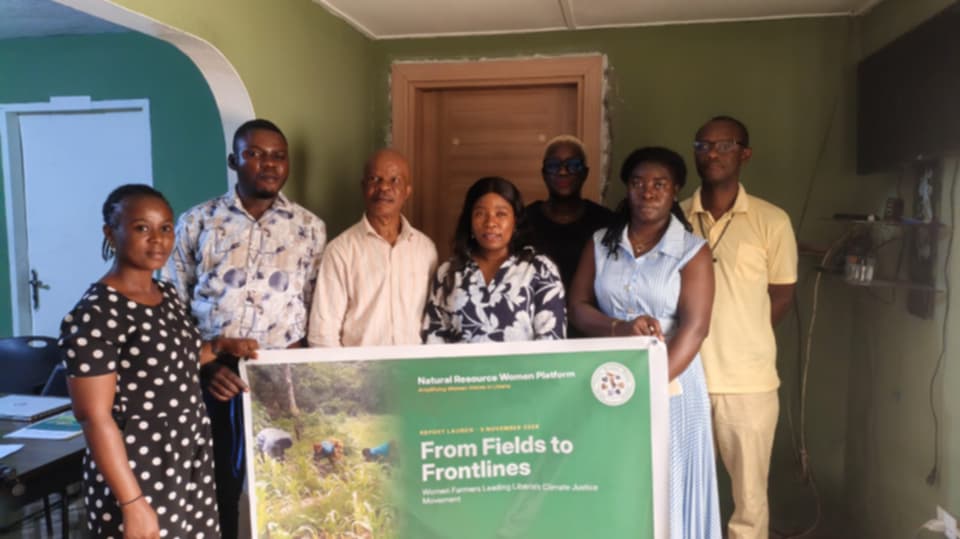
The report, titled “From Fields to Frontlines: Women Farmers Leading Liberia’s Climate Justice Movement,” was officially launched Tuesday November 3, 2026 at the NRWP’s office in Monrovia.
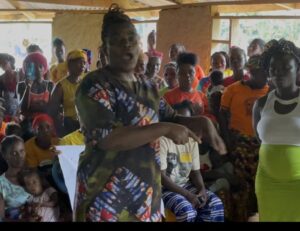
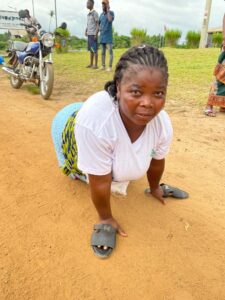
The report revealed the impact of climate change on women farmers, their livelihoods and food security, while highlighting the limited support available to help them adapt to changing environmental conditions.
Presenting the report, Ms. Veronica Graye, the head of secretarial at the NRWP, said that the assessment was conducted between June 2024 and October 2025, covering 124 smallholder farmers, including 115 women and nine men, in Grand Cape Mount, Bomi, Margibi, Grand Bassa, Nimba and Bong counties.
Findings from the survey indicate that 93 percent of the farmers said that climate change has worsened their household food security, while 87 percent reported losing their livelihoods as a result of climate-related impacts.
According to the report, 83 percent of farmers’ crops had been damaged by pests, while only seven out of 123 farmers reported using improved seeds highlighting the limited access to agricultural inputs and climate-resilient farming technologies.
The report further identifies changing rainfall patterns and increasing heat as two of the major climate-related challenges affecting agricultural production. Approximately 60 percent of respondents identified changing rainfall patterns as a major concern, while 46 percent cited harsher sunlight and heat.
For many women farmers, these challenges extend beyond agricultural production, affecting household income, children’s education and their ability to prepare for subsequent farming seasons.
The report explains that failed harvests often mean less food for families, difficulties paying school fees and reduced resources to invest in the next planting season.Despite these challenges, women farmers continue to rely heavily on informal community structures to sustain their agricultural activities.
The survey found that 59 percent of respondents farm together through traditional Koo groups, while only 14 percent belong to formal agricultural cooperatives.
The findings also expose a significant knowledge gap regarding emerging climate finance opportunities. About 97 percent of the women farmers who responded to this survey, representing 71 of 73 respondents, said they had never heard of carbon markets.
This report underscores the need to improve women’s access to climate information, training and financial opportunities, particularly as Liberia advances its climate commitments.
Women Farmers Demand Action on Climate CommitmentsThe NRWP report comes at a time when Liberia is implementing its third Nationally Determined Contribution (NDC 3.0), which outlines the country’s commitments to addressing climate change and strengthening climate resilience.
However, the assessment raises concerns about the gap between national climate policy commitments and the realities confronting women farmers in rural communities.Speaking on the findings, Radiatu H. S. Kahnplaye, NRWP’s Policy Advisor, said women farmers were on the frontline of climate change but continued to receive limited support.
“Women farmers are on the frontline of climate change in Liberia,” Kahnplaye said. “Liberia’s NDC 3.0 makes real promises to women. Now those promises must be costed, funded and reach women in the communities.
Climate solutions that do not center women farmers will fail.”The report also features the experiences of women farmers whose agricultural activities have become increasingly unpredictable because of changing weather conditions.
One woman farmer from Bong County described how the traditional understanding of seasonal rainfall has changed, making it difficult for farmers to plan their activities.
“Before, there was a special time for rain and sun. But now, when it is expected to rain, the sun will shine, and when the sun is expected to shine, rain will fall,” she said.Her experience reflects the uncertainty facing smallholder farmers who depend largely on rainfall for agricultural production.
NRWP Calls for Government Intervention to address the challenges identified in the assessment, the Natural Resource Women Platform is calling on the Government of Liberia and development partners to translate national climate commitments into practical interventions that directly benefit women farmers.
Among its recommendations, the organization is urging the government to cost the gender commitments outlined in Liberia’s NDC 3.0 and provide annual reports on their implementation, provide basic
About The Author