“Educate Her” Coalition Hosts Public Forum to Strengthen Community Support for Girls’ Education

November 24, 2025
Monrovia: The Educate Her Coalition has convened a one-day Public Discourse in Monrovia, bringing together educators, policymakers, civil society groups, and community leaders to renew national efforts toward improving girls’ education and advancing gender equality across Liberia.
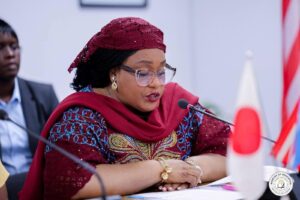
The forum focused on strengthening local leadership and grassroots advocacy while reinforcing commitments outlined in the National Policy on Girls’ Education (NPGE). Madam Hawa Casandria Wilson, who served as the program’s lead presenter, stressed that Liberia must continue working toward a society where “girls and boys have equal and affordable access to quality education.”
She noted that the NPGE provides a comprehensive framework for addressing gender disparities and ensuring that girls receive equitable opportunities at all levels of learning. “The National Policy on Girls’ Education outlines priority actions for government and partners and provides a roadmap for eliminating the barriers that keep girls out of school,” Madam Wilson said.
Addressing persistent Barriers facing Girls, Madam Wilson highlighted several systemic challenges that continue to hinder girls’ academic progress from legislative gaps to weak institutional systems.
These challenges, she said, include: • Insufficient gender-responsive laws and policies • Poor monitoring and coordination of gender equality programs • Limited integration of gender considerations into national and community education plans • Weak collaboration among government, schools, and local partners.
She described the country’s retention figures as “deeply troubling,” citing statistics that show less than half of enrolled girls remain in school through each stage: • 49.2% retention at early childhood education • 47.8% at primary • 48.8% at upper basic • 46.9% at secondary, “These numbers clearly show the ongoing struggle to keep girls enrolled and progressing,” she said.
Madam Wilson also pointed to rising dropout rates especially during the transition from primary to secondary school. The leading causes, she noted, include teenage pregnancy, child labor, sexual and gender-based violence, poor academic performance, and unsupportive school environments.
Another key concern is the low number of female teachers women make up just 28% of Liberia’s teaching workforce. According to her, the shortage of female educators affects mentorship opportunities and can discourage girls from remaining in school.
Poverty, Cultural Beliefs Remain Major Obstacles Madam Wilson emphasized that poverty remains the greatest barrier to girls’ education. Many families, she explained, cannot afford school fees or basic learning materials, while children from single-parent or foster households face added risks of dropping out. Cultural norms and traditional practices also continue to restrict opportunities for girls.
“I have discovered that many parents prefer educating boys over girls,” she said. “Some encourage traditional ‘bush’ school participation, while others give their daughters into early marriage. All of these practices continue to harm girls’ educational opportunities.” Calls for Stronger Intervention To tackle these challenges, Madam Wilson outlined several urgent interventions, including: • A dedicated national funding mechanism for girls’ education • Integration of life-skills training into school curricula • Scholarships and financial support for girls from vulnerable families • Full implementation of the National Policy on Girls’ Education.
She also urged local education authorities to intensify their roles. County and District School Boards, she said, must adopt more proactive gender-responsive measures, while school administrators should maintain safe learning environments and track attendance more effectively.
Chapter 3.1 of the NPGE, she noted, outlines additional barriers such as child labor, sexual exploitation, and the scarcity of public schools especially in remote rural areas. Renewed Commitment. The Educate Her Coalition said the Public Discourse was intended to spark renewed collaboration between government ministries, school administrators, community leaders, and development partners. The Organizers emphasized that effective accountability and greater investment are essential to ensuring that every Liberian girl can learn, grow, and reach her full potential.