IMF Releases $50 Million for Liberia Warns Corruption and Slow Reforms Threaten Growth
November 17, 2026
Monrovia: The International Monetary Fund has cleared another US$50 million for Liberia, but its latest country report cautions that the country’s reform efforts are lagging even as the economy expands.
It names systemic corruption, and an anti-corruption body short on resources, as major obstacles.On September 28, 2026, the IMF Executive Board wrapped up the fourth review of Liberia’s Extended Credit Facility and the first review of its Resilience and Sustainability Facility.
The decisions release SDR 19.3 million (about US$26.2 million) and SDR 17.62 million (about US$23.96 million), respectively.
The staff report was finalized on September 9 after talks that ended on June 23, and it was published alongside the board’s decision.
Corruption flagged as a core economic problem.The report describes corruption and a weak rule of law as macro-critical issues. In the IMF’s assessment, they undermine institutions, limit the government’s fiscal capacity, discourage investment and hold back inclusive growth.
It points to shortcomings in public financial management, limited transparency and gaps in oversight bodies.
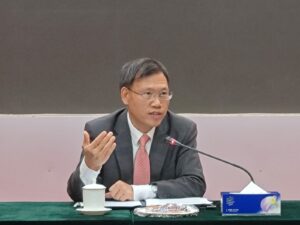
Acting Chair Bo Li said that releasing the governance diagnostic report with a focused action plan would show development partners that the authorities are serious about tackling institutional weaknesses and graft.
He also called on Liberia to lift the legal barriers that stop the publication of public officials’ asset declarations.
The data on those declarations is troubling the report noted. According to the report, Compliance fell by 19 percentage points from the year before, weakening a tool meant to expose conflicts of interest and unexplained wealth.
Publishing a declaration currently requires a court order, and a bill to change that is before the Legislature but has not been passed.
Recent audits also found mismatches between revenue logged in the Tax Administration System and the amounts that actually reached consolidated revenue accounts.
The IMF wants outstanding special audits published, including those on historical domestic debt (1980–2024) and NASSCORP.
Anti-corruption commission short of resourcesAlthough funding for integrity institutions rose in the FY2026 budget, the IMF says the Liberia Anti-Corruption Commission is still hampered by limited resources.
It wants the body fully operational, properly funded and equipped to enforce accountability, noting that an agency that exists only on paper cannot investigate, verify or enforce.
The Fund also urged stronger verification and enforcement and quick approval of the asset-declaration amendments.Uneven program performance.
The IMF rated overall performance “broadly satisfactory,” but Liberia missed two of five indicative targets for December 2025, the Liberiadollar share of public wage payments and the build-up of new domestic arrears.
The arrears miss was blamed on a technical delay at the Central Bank of Liberia.Structural reforms fared worse.
All six applicable benchmarks missed their original deadlines. Three were completed late and one was done as a prior action. The last two, revenue code amendments to support VAT implementation and publication of the governance diagnostic with an action plan, were pushed to October and November 2026.
Progress on recommendations from the General Auditing Commission’s compliance audit and the Kroll forensic audit has also been slower than expected.
The Central Bank has started reconciling suspense accounts and tightening oversight of financial guarantees, but the IMF wants the remaining safeguards measures sped up, including bringing the bank’s governance and internal controls fully in line with the CBL Act.
The banking system’s non-performing loan ratio dropped from 19.6 percent at the end of 2024 to 13 percent in March 2026, but mostly because loans were written off, not repaid. Of the US$42.3 million fall in bad loans, about US$39.7 million came from write-offs.
The ratio has since climbed back to 16.6 percent in May, and the state-owned bank’s stood at 33 percent in March.Recapitalization of weak banks is moving more slowly than planned, the IMF said, and it urged faster cuts to bad loans to strengthen balance sheets and support private credit. It also called the issuance of new banknotes an immediate priority to ease shortages.
External and spending risksLiberia’s external position remains precarious, with the current account deficit expected to widen to 18 percent of GDP in 2026 because of reliance on imported fuel, capital goods and specialized services.
A one-off US$200 million concession payment from ArcelorMittal Liberia in March and higher World Bank budget support have offered temporary relief.
The IMF urged the government to spend the windfall prudently and transparently, spreading it over 2026–27 given capacity constraints.
Falling donor support and high global fuel prices add to the pressure.The Fund also advised cutting unproductive spending to make room for priority infrastructure while keeping fiscal discipline, and said better selection, delivery and monitoring of capital projects is key to improving spending quality.
It warned that reform delays could worsen existing vulnerabilities.
Finally, the report notes Liberia’s exposure to floods and extreme weather, which could hurt agriculture, food security and public finances. It also flags the economy’s dependence on extractive industries, with gold making up roughly 65 percent of goods exports.
About The Author