Liberia Launches ‘Stand for Her Land’ Campaign to Advance Women’s Land Rights at Rural Women Conference
By Laymah Kollie
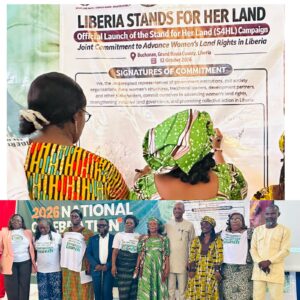
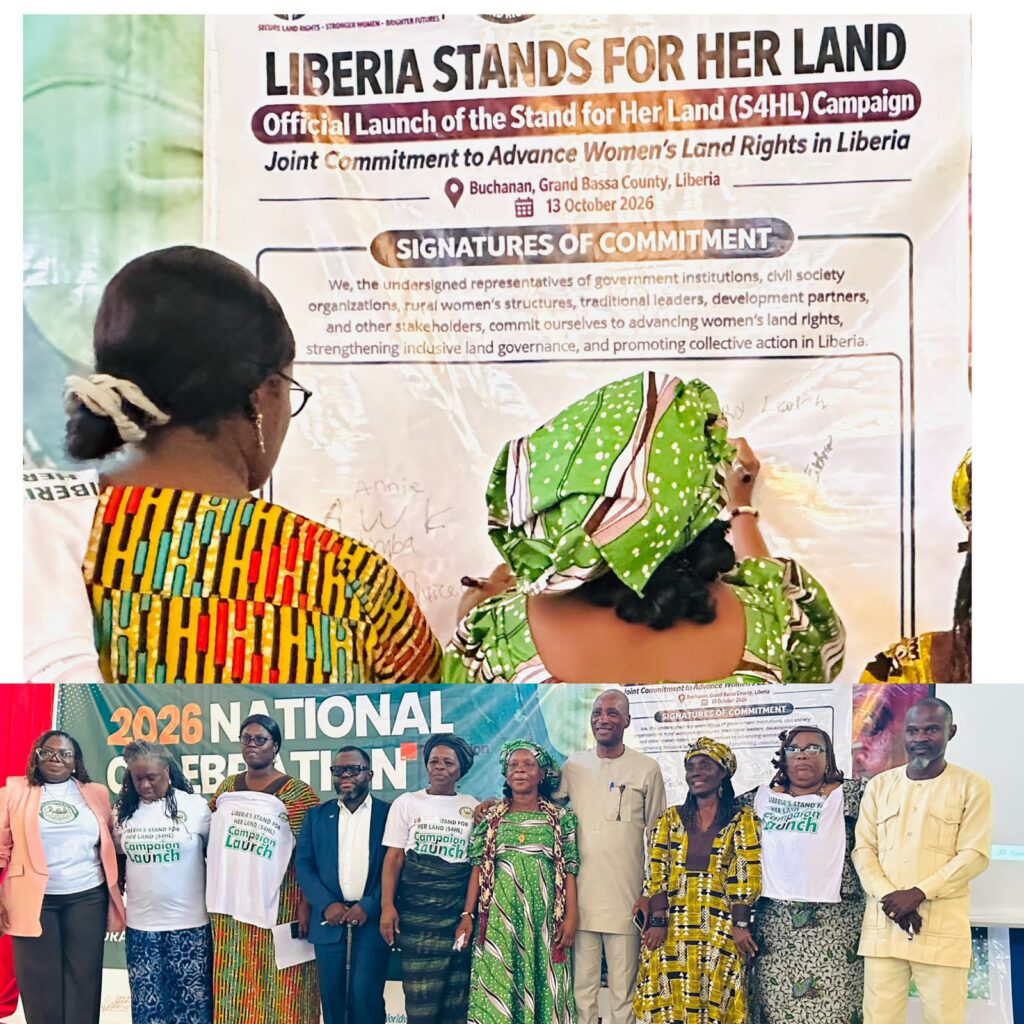
BUCHANAN, Grand Bassa County, Liberia, October 13, 2026 — Liberia has launched the Stand for Her Land (S4HL) Campaign, a national advocacy initiative aimed at strengthening women’s land rights, promoting equitable access to land, and addressing barriers that prevent rural women from owning, inheriting, and controlling land.
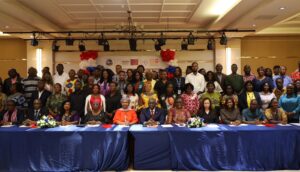
The campaign was launched Tuesday in Buchanan, Grand Bassa County, during the 2026 National Celebration and Action Forum for Rural Women, bringing together government institutions, rural women’s organizations, civil society groups, traditional leaders, development partners, academia, and private-sector representatives to reaffirm their commitment to protecting women’s land rights.
The launch formed part of the three-day 2026 National Rural Women Land Rights Conference, held from October 13 to 15 under the theme, “Celebrating Rural Women Securing Land Rights Advancing Resident Livelihood.” Organized by ForumCiv Liberia in collaboration with the Ministry of Gender, Children and Social Protection, the Liberia Land Authority, the National Alliance for Women’s Land Rights, the National Rural Women Structure, and other partners, the conference provides a platform for rural women from Liberia’s 15 counties to engage policymakers and other stakeholders on land ownership, access to justice, and economic empowerment.
Under the campaign slogan, “Liberia Stands for Her Land,” participating institutions and organizations signed a joint commitment declaration pledging to work collectively to advance women’s land rights across the country.
The declaration recognizes secure land rights as fundamental to gender equality, economic empowerment, food security, social justice, and sustainable development. It commits stakeholders to ensuring that women can access, use, inherit, own, and benefit from land and natural resources.
Among the campaign’s key priorities are promoting secure and equitable land rights for women, supporting the implementation of land-related laws and policies, strengthening public awareness and advocacy, and increasing women’s participation in land governance.
The commitment also emphasizes expanding women’s access to legal assistance, information, and dispute-resolution mechanisms, while strengthening collaboration among government institutions, civil society, traditional authorities, and development partners.
Stakeholders further pledged to support research, evidence generation, and accountability, as well as practical interventions to improve the lives and livelihoods of rural women.
LLA assures women of land protection
At the opening of the conference, Julius B. Kawa, Director of Land Policy and Planning at the Liberia Land Authority (LLA), assured rural women of the Authority’s commitment to protecting their land rights, declaring that it would work to prevent men from unlawfully taking land belonging to women.
“When you secure land for rural women, you secure land for Liberia,” Kawa said, reaffirming the importance of women’s access to and ownership of land.
“As Land Authority, we will fight to ensure that every land for rural women will be given to rural women. We will fight to ensure that men don’t take your land from you,” he added.
His remarks reinforced the campaign’s central message that protecting women’s land rights requires effective implementation of existing laws, stronger institutional support, and action against practices that undermine women’s ownership and control of land.
Grand Bassa pledges continued support
Grand Bassa County Superintendent Karyou Johnson, delivering the welcome address, described rural women as central to Liberia’s economy, food production, and family welfare, despite the difficulties many face in securing land and accessing justice.
“Rural women are the backbone of Liberia. You feed our nation, you care for our families, you keep our farms alive, and yet you still struggle for land, for justice, and for economic power,” Johnson said.
He stressed that land rights should not be viewed as a privilege granted to women but as a fundamental right that deserves recognition and protection.
“This forum is timely. It is time we talk about land rights not as a favor, but as your right,” he stated.
Johnson welcomed delegates from across Liberia and declared Buchanan the capital of rural women for the duration of the gathering.
He also highlighted his administration’s support for rural women through financial assistance, agricultural inputs, and contributions to rural women’s programmes during two county budget periods.
“My promise to you today is that Grand Bassa will continue to be a champion for women’s land rights, access to justice, and economic empowerment,” he said, pledging continued support for the National Rural Women Structure.
Land represents identity and belonging
Akiror Hope Opio, Communications Officer of The Hunger Project Uganda, emphasized that land represents more than an economic resource, describing it as an essential part of people’s identity and sense of belonging.
“Land is not just a resource but an identity, and who we are,” Opio said.
She called on traditional leaders to address customary practices and systems of injustice that prevent women from accessing and controlling land on equal terms.
Opio also encouraged communities and women themselves to take an active role in identifying and implementing solutions to the challenges they face.
“We do not wait for white to bring us solutions, we have the problems, we have the solutions,” she declared.
Her remarks highlighted the importance of community leadership, local participation, and changes in traditional practices that disadvantage women in land ownership and governance.
Advocates call for effective implementation of land law
James Yarsiah, Executive Director of the Rights and Rice Foundation, said legal protection for women’s land rights is critical because of the significant role women play in agricultural production and food security.
He observed that although rural women work hard to produce food for households and communities, many do not own the land they cultivate.
“The women work every hard for the food we eat everyday, but not many of them own the land they are working on. That is why the land right law is very important,” Yarsiah said.
His remarks underscored the disparity between women’s contributions to agriculture and their ability to exercise secure ownership and control over land.
Meanwhile, Goran Goran Holmqvist, Secretary General of ForumCiv Global, urged stakeholders to translate their commitments into measurable improvements in the lives of rural women.
“Let us not measure success by promises but by actions,” Holmqvist said.
He called for concrete progress in women’s economic security, access to opportunities, and land ownership, emphasizing that conference resolutions must lead to practical interventions.
The Ministry of Gender, Children and Social Protection, through Deputy Minister Laura Golakeh, also reaffirmed the government’s commitment to working with rural women and other stakeholders to address challenges affecting women and strengthen their participation in national development.
Campaign targets the gap between law and practice
The launch of the Stand for Her Land Campaign comes amid continued calls for stronger enforcement of legal protections and greater public awareness of women’s land rights.
Liberia’s Land Rights Act of 2018 provides a legal framework for recognizing and protecting land rights, including customary land rights. However, rural women may continue to encounter barriers arising from customary practices, inheritance arrangements, limited representation in traditional decision-making structures, and disputes over land ownership and control.
Women’s land rights advocates have repeatedly stressed the need to bridge the gap between legal guarantees and the realities women face in their communities. They have also called for greater participation by women in land governance, protection against unlawful dispossession, and improved access to information and legal support.
The campaign’s joint commitment declaration seeks to strengthen cooperation among government institutions, traditional authorities, civil society, and development partners to address these challenges.
Background
The 2026 gathering marks the seventh edition of the National Rural Women Land Rights Conference organized by ForumCiv Liberia. First held in 2020, the conference has provided a platform for rural women leaders from across Liberia to share experiences, raise concerns, and engage policymakers and other stakeholders on barriers to land ownership and control.
The conference brings together participants to examine the links between land rights, food security, economic empowerment, gender equality, and sustainable rural development.
With the launch of the Stand for Her Land Campaign, organizers and participating institutions are seeking to build on these discussions by strengthening advocacy, accountability, and practical action to protect women’s land rights.
As the conference continues through October 15 in Buchanan, stakeholders are expected to focus on translating their commitments into tangible outcomes that enable rural women to secure their land, protect their livelihoods, and participate more fully in Liberia’s development.
The campaign’s message is clear: securing women’s land rights is not only about land ownership but also about justice, dignity, food security, and sustainable development.
About The Author