Women in Grand Cape Mount Turn Empowerment Grants Into Opportunities for Others
By Lazota Bility
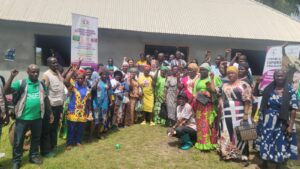
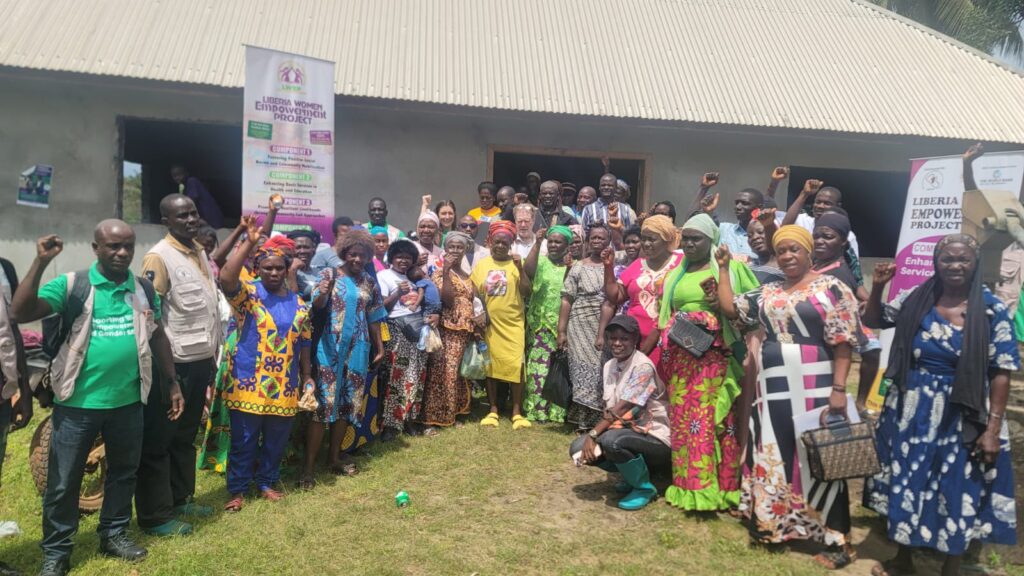
On a sunny Tuesday morning, women from Tosor Community in Grand Cape Mount County gathered to share how empowerment grants are not only strengthening their own livelihoods, but also helping them create opportunities for other women by providing access to capital for small businesses.
“Through this empowerment project, we have been able to grow our businesses, help other women within our Village Savings Group have access to loans to improve their businesses, send our children to school and improve our farming activities. Thank you, Government of Liberia.”
Dancing and singing praises in their local dialects while shaking sasa, the women welcomed a World Bank technical review mission and other visitors with traditional performances, including the presentation of kola nuts and two white chickens.
The gathering formed part of a field visit hosted by the Ministry of Gender, Children and Social Protection (MGCSP), through the Liberia Women Empowerment Project (LWEP), to review progress and hear directly from community members about the project’s impact.
For many of the women in Tosor, however, the impact of the project is best seen through what they have done with the support they received.
Madam Tarlor N. Kennedy, Chairperson of the Dependable Women Saving Group, said the empowerment funds had significantly increased the capacity of members of her group.
“We have been able to provide credit to women seeking capital for their businesses. Our group received a US$4,000 grant, and we immediately created a separate mechanism to manage the project funds,” Kennedy said.
According to Kennedy, the group has since been lending the funds to women who need capital to support their businesses.
She said the lending activity has generated LD$216,000 in interest, creating an additional source of funds for the group and allowing members to continue supporting women within their community.
Also speaking, Sao G. Kromah, Chairperson of Eat Some and Keep Some, highlighted lessons learned in climate-resilient livelihoods, business management and the responsible use of community funds.
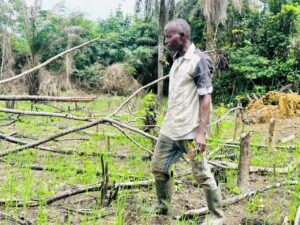
She said the women had received training on soil management and climate change, including crop rotation and the use of decomposed vegetation to restore soil fertility.
Kromah noted that some women have already begun applying the techniques in their gardens.
The visit brought together the World Bank mission, the LWEP Project Management Unit, county authorities, community leaders and implementing partners, including Plan International, ActionAid Liberia, CRS Liberia, WONGOSOL, DCR and CHI, as well as project beneficiaries.
The engagement gave community representatives an opportunity to discuss their experiences, challenges and lessons learned, while the visiting team observed how LWEP interventions are being implemented at the community level.
Providing an overview of the project, LWEP Manager at Plan International, the lead service provider, Abdulai Sheriff, said the five-year initiative is expected to run through June 2027 and is being implemented in 498 communities.
According to Sheriff, the project is expected to reach about 267,200 people, while its overall financing is estimated at US$44.6 million, including US$18 million earmarked for grants.
“The intervention contains several components covering community governance, grievance redress, gender-based violence prevention and response, climate resilience, record keeping, business management and Good Agricultural Practices (GAP),” Sheriff said.
The community engagement also included representatives from the Grievance Redress Committee, Village Savings and Loan Associations, implementing entities, farmer-based organizations, health service providers, Community-Based Agents and local government.
Following the dialogue, the World Bank mission and project partners visited VSLA activities, livelihood groups, individual enterprises, income-generating activities and other community structures supported by LWEP.
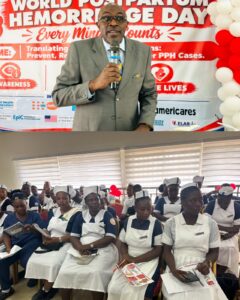
The field visit also extended beyond livelihood activities, with the delegation visiting a health facility in Robertsport to engage with doctors, nurses and other health authorities.
Health workers shared concerns about challenges faced in providing services to survivors of gender-based violence and other vulnerable people in the county.
“ We need support at times when we have survivors we need support to relocate them into different communities to avoid them being Name or shame by their neighbors “
They said pointing at means of transportation as a major challenge for them.
Their explanation provided the World Bank, MGCSP and project partners a deeper understanding on what affecting service delivery and the support needed by survivors.
The visit also featured a drama performance focused on gender-based violence. Through the performance, community members delivered a message on the importance of protecting family members, treating one another with care and creating safer homes and communities.
The performance added a community voice to the discussions on gender-based violence, showing how awareness and prevention remain an important part of efforts to improve the well-being of women, girls and families.
The field visit ended with continued discussions among community members, government representatives and development partners on the progress made under LWEP and areas requiring further attention.
For the women of Tosor, however, the message was clear: the support they received is not only helping them improve their own livelihoods, but is also creating opportunities for other women to access capital, strengthen their businesses and build more secure futures for their families.
Their experiences offered a practical picture of how investments in women’s economic empowerment can extend beyond individual beneficiaries and contribute to stronger and more resilient communities.
About The Author