Yarkpawolo Calls for National Unity to Defeat Liberia’s Drug Crisis
By: Laymah Kollie
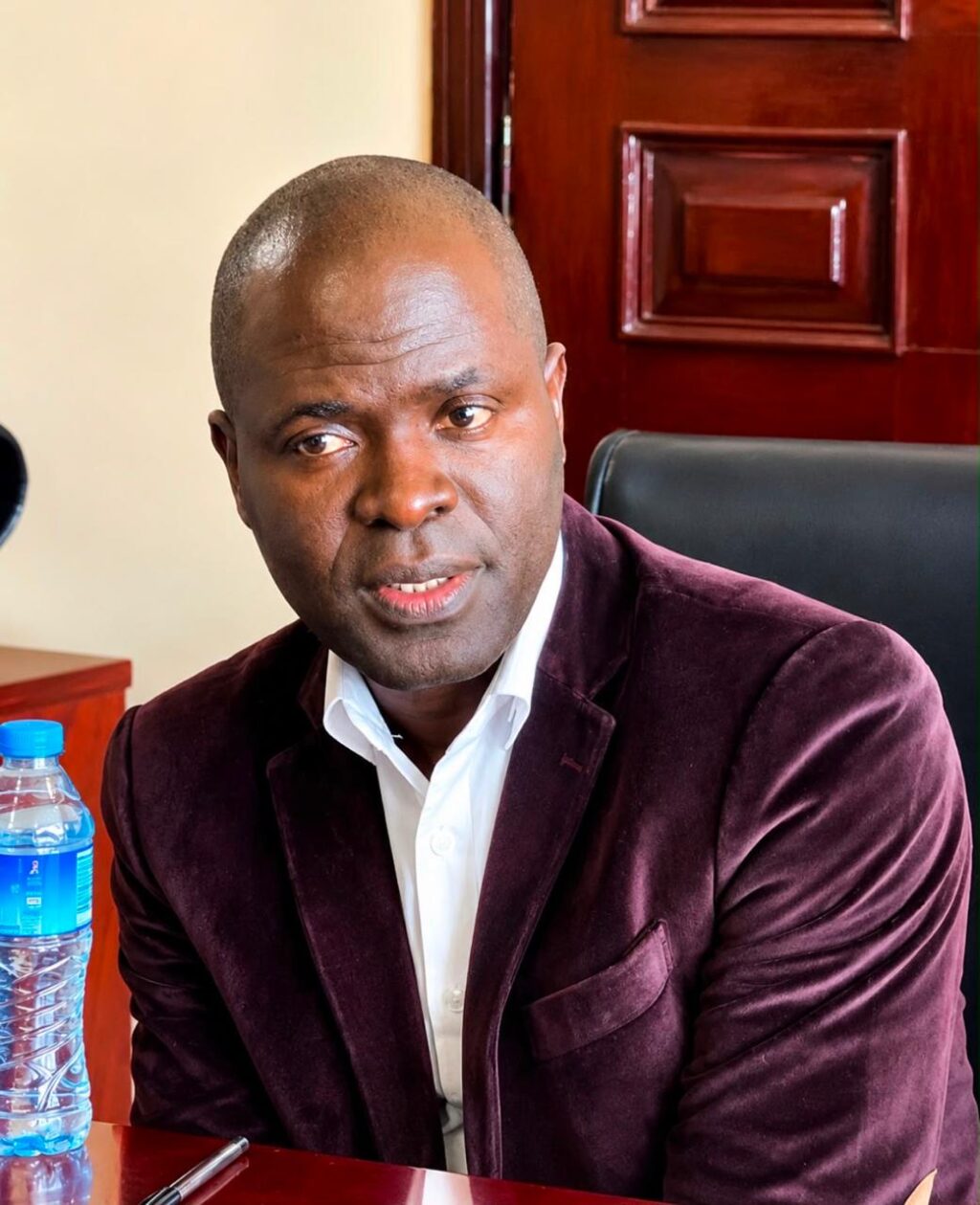
MONROVIA, Liberia — The Executive Director of the Environmental Protection Agency (EPA), Dr. Emmanuel King Urey Yarkpawolo, has called for a nationwide, collective response to Liberia’s growing drug crisis, arguing that the fight against narcotics trafficking and substance abuse cannot be left to the government and security agencies alone.
In a strongly worded personal opinion, Dr. Yarkpawolo said Liberia’s history demonstrates that collective action by citizens can either deepen national crises or help the country overcome them.
He cited the 1979 Rice Riot, Liberia’s civil wars, the women-led peace movement and the country’s response to the 2014 Ebola epidemic as examples of moments when collective action fundamentally altered the nation’s course.
According to him, the same spirit of collective action is now needed to confront what he described as another serious national emergency ( the drug crisi)s.
“Too many young men and women are being destroyed by dangerous substances,” Yarkpawolo wrote. “Parents are losing their children, communities are losing productive citizens, and Liberia risks losing an entire generation.”
He argued that the responsibility for tackling the crisis must extend beyond President Joseph Nyuma Boakai, the Liberia Drug Enforcement Agency (LDEA), police and the courts.
“The fight cannot be left to President Joseph Nyuma Boakai, the Liberia Drug Enforcement Agency, the police, or the courts alone,” he said.
A crisis extending beyond drug abuse
Liberia’s drug problem has increasingly become both a public-health and national-security concern, with synthetic drugs such as kush affecting communities while cocaine trafficking has exposed the country to increasingly sophisticated international criminal networks.
In 2025, women’s organizations staged a major protest in Monrovia over the worsening drug problem, calling for stronger government action. The protests reflected growing public concern about the impact of substance abuse on Liberian youth and communities.
The LDEA has also reported significant enforcement activity. During the first quarter of 2026, the agency said it arrested 233 suspects nationwide in connection with drug trafficking and illicit narcotics activities. It reported seizing 422.08 kilograms of assorted narcotics, including 115.66 kilograms of kush, 248.56 kilograms of marijuana, 57.30 kilograms of tramadol and 0.56 kilograms of cocaine.
The agency said its seizures fell sharply compared with the final quarter of 2025, attributing the reduction to increased enforcement pressure while acknowledging continuing challenges such as limited logistics, surveillance technology and increasingly sophisticated trafficking methods.
Major cocaine investigations raise new concerns
The national drug debate has intensified following several major cocaine seizures and investigations in 2026.
On June 8, authorities intercepted approximately 237.6 kilograms of cocaine, valued at more than US$19 million, at Roberts International Airport. The seizure prompted President Boakai to order a Joint National Security Investigation involving the LDEA, Liberia National Police, National Security Agency, Financial Intelligence Agency, Immigration, Customs, airport security and other institutions.
Investigators have said the inquiry goes beyond identifying the individuals who physically handled the shipment. The stated objective is to establish the broader criminal network responsible for financing, coordinating, facilitating and profiting from the operation.
The investigation has already produced significant developments. Authorities have said investigators conducted interviews, secured documentary and electronic evidence, developed additional leads and began efforts to locate other suspects believed to be connected to the importation, concealment, transportation and attempted exportation of the cocaine.
The government also suspended a member of the National Oil Company of Liberia board pending the investigation, while stressing that the administrative action did not constitute a finding of guilt.
In a separate development, four LDEA officers were dismissed and prosecuted after an internal investigation into alleged tampering with cocaine evidence connected to a 2025 case. Two of the defendants subsequently pleaded guilty in court, according to the LDEA.
Liberia’s biggest drug seizure
The scale of the trafficking threat became even more apparent in July, when Liberian authorities seized nearly 4,000 kilograms of cocaine in Duazon, outside Monrovia, in what authorities described as one of the country’s largest drug seizures.
Two foreign nationals were arrested in connection with the seizure, while the investigation has also raised questions about possible involvement by Liberian security officials. Senior police personnel have reportedly been implicated and placed under investigation or charged, underscoring concerns about possible institutional infiltration by drug-trafficking networks.
The authorities subsequently destroyed approximately 4.2 metric tons of seized cocaine, with the haul valued at hundreds of millions of dollars.
The developments have reinforced concerns that Liberia may be increasingly attractive to international trafficking organizations seeking routes through West Africa between South America and European markets.
Yarkpawolo: No protection for traffickers
Against this backdrop, Yarkpawolo said Liberia must reject political, social and family protection for people involved in the drug trade.
He called for traffickers and their collaborators to be investigated and prosecuted regardless of their wealth, political connections, family relationships or community standing.
“There must be no hiding place for drug traffickers and their collaborators,” he said.
The EPA executive also stressed the importance of distinguishing between traffickers and people suffering from addiction.
While traffickers, according to his position, should face the full force of the law, people battling addiction should receive treatment, rehabilitation and opportunities to reintegrate into society.
“The victims of this crisis need help, not rejection,” he wrote.
Communities urged to join the fight
Yarkpawolo is calling on Liberians to make the drug crisis a national cause, with communities providing credible information to authorities and religious and traditional leaders speaking openly against drug trafficking and substance abuse.
He also urged schools to educate young people about the dangers of drugs and called on parents to pay closer attention to behavioral changes among their children.
The call comes as the LDEA continues to encourage citizens to report suspected drug-related activities while expanding its presence and enforcement operations across the country. The agency has said the fight against drugs is a shared national responsibility.
For Yarkpawolo, Liberia’s past provides evidence that the country can overcome seemingly overwhelming national emergencies when citizens unite behind a common purpose.
He pointed to the role of Liberian women in the peace movement during the civil war and the cooperation among communities, health workers, government institutions, religious leaders and international partners during the Ebola crisis.
His argument is that the same national resolve can now be directed toward drugs.
“Liberians have overcome war, Ebola, and many other national challenges. We can also overcome drugs,” he wrote.
He urged Liberians to expose traffickers through lawful reporting, protect their communities, educate children and support people recovering from addiction.
“When Liberia’s people unite behind a righteous cause, even the greatest challenge can be defeated,” Yarkpawolo concluded.
About The Author