WONGOSOL Leads National Memory and Reconciliation Sessions for War Victims and Survivors Under PeaceGen Liberia
By: Laymah Kollie
Paynesville, August 19,2026 — The Women NGOs Secretariat of Liberia (WONGOSOL), in partnership with the Office for the Establishment of the War and Economic Crimes Court for Liberia (OWECC-L), Liberia Massacre Survivors Association (LIMASA) and other PeaceGen partners, has commenced a series of national Memory and Reconciliation Sessions aimed at providing safe, inclusive and survivor-centered spaces for Liberians to remember the country’s civil war, reflect on its legacy and advance healing, reconciliation and sustainable peace.
The sessions are being implemented under the PeaceGen Liberia “Generation for Peace” project funded by European Union and co-funded by the Embassy of Ireland. PeaceGen is a three-year initiative implemented by Kvinna till Kvinna as lead WONGOSOL as co-lead in partnership with Female Journalist Association(FeJAL), Alliance for Peace, Justice and Human Rights (APJHR), National Young Women Political Council of Liberia (NYWPCL), and Association of Female Lawyers of Liberia (AFELL)
WONGOSOL is leading the implementation of the Memory and Reconciliation Sessions in collaboration with PeaceGen partners.
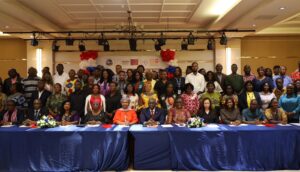
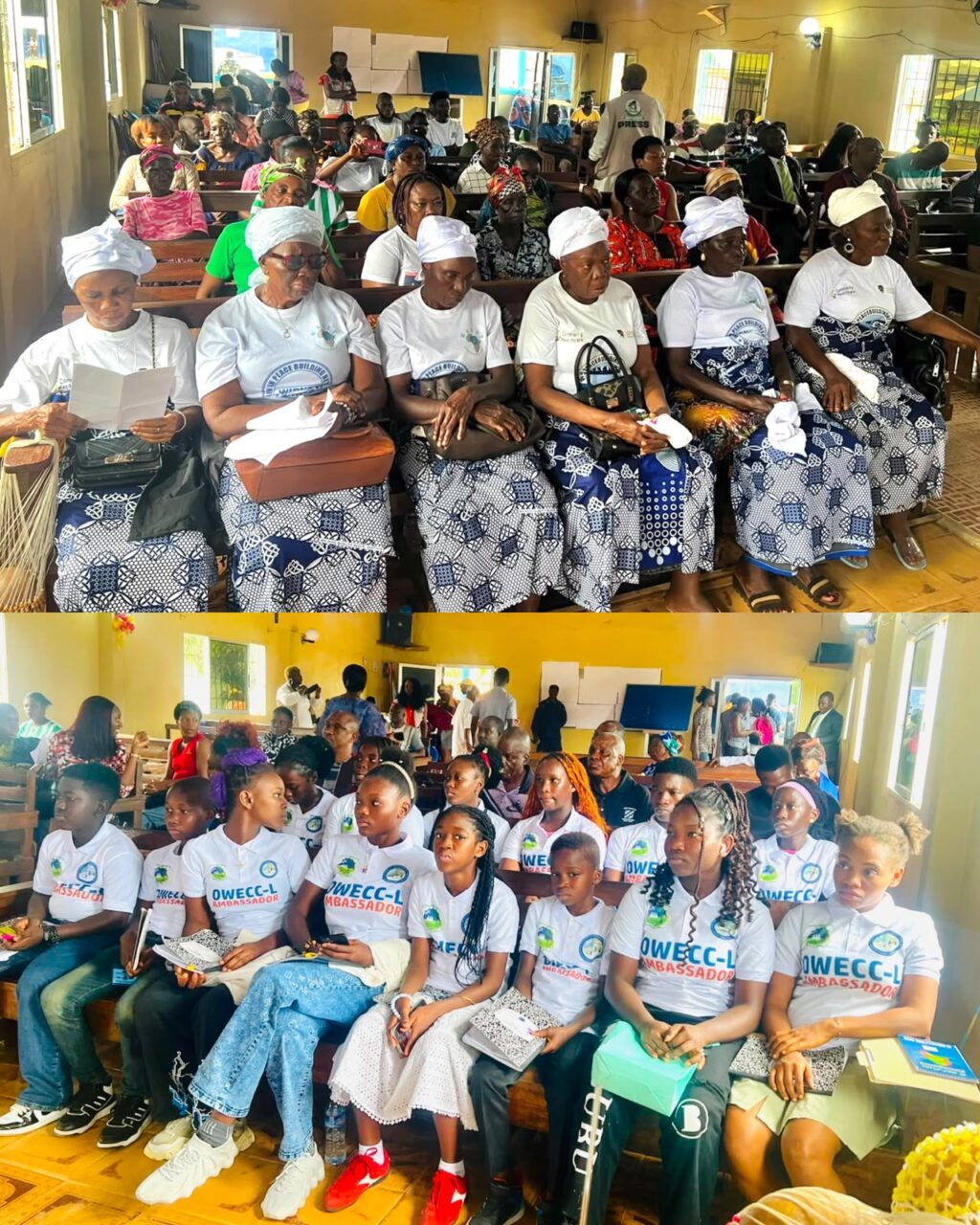
The first session was held on Tuesday, August 18, at the Soul Clinic Baptist Church in Kiamah Town, Montserrado County, bringing together war victims and survivors, women leaders, youth representatives, community leaders, civil society actors and government representatives.
The activity coincided with the 23rd anniversary of the signing of the Accra Comprehensive Peace Agreement, which formally ended Liberia’s civil conflict.
The Memory and Reconciliation Sessions are intended to create a safe space where survivors and communities can reflect on Liberia’s shared history, acknowledge past wounds, share experiences and perspectives, and contribute to pathways toward healing, reconciliation and stronger, more united communities.
Providing an overview of the initiative, WONGOSOL Executive Director Madam Esther S. Davis Yango said the sessions are designed to provide a safe, survivor-centered space for Liberians to share experiences, reflect on the country’s transitional justice process and develop community recommendations for lasting peace.
She stressed that peace is not simply the absence of war, noting that sustainable peace requires truth, justice, accountability, healing, reconciliation and the meaningful participation of citizens, particularly women, young people and survivors, in decisions that affect their lives and the future of the country.
Yango noted that more than two decades after the end of Liberia’s civil conflict, many individuals and communities continue to carry painful memories, unresolved grievances and the lasting effects of violence.
“Today’s session is therefore intended to create a safe, inclusive and intergenerational space where survivors, young people, elders, women, community leaders, civil society organizations and government representatives can reflect on Liberia’s past, share experiences and identify collective pathways towards healing, reconciliation and sustainable peace,” she said.
During a panel discussion, Cllr. Jallah A. Barbu, Executive Director of OWECC-L, highlighted the connection between the promise of peace contained in the Accra Comprehensive Peace Agreement and Liberia’s broader transitional justice process.
He recalled that the Truth and Reconciliation Commission (TRC), which operated from 2005 to 2009, issued 207 recommendations addressing truth-telling, reparations, accountability and memorialization. Among its recommendations was the establishment of an “Extraordinary Criminal Court” to prosecute those responsible for serious crimes committed during Liberia’s conflicts.
Barbu noted that the recommendation remained largely unimplemented for years but has gained renewed momentum. In 2024, the Legislature adopted a joint resolution supporting the establishment of a war crimes court, which was endorsed by President Joseph Boakai. Executive Order 131 subsequently established OWECC-L to prepare the institutional framework for the court.
In May 2026, President Boakai transmitted legislation to the Legislature seeking to formally establish a War and Economic Crimes Court and an Anti-Corruption Court.
Barbu said accountability remains critical to restoring public trust and strengthening national security. He stressed that the proposed court should focus on fair and independent prosecution of those bearing the greatest responsibility for grave crimes.
He also called for adherence to international fair-trial standards and the establishment of witness-protection mechanisms before prosecutions begin.
Delivering the keynote address, Sheikh S. S. Kamara, Executive Director of the Liberia Peacebuilding Office, challenged participants to consider three questions: What do we remember? What have we reconciled? What must we do next?
Kamara led a moment of silence for victims of Liberia’s civil wars and paid tribute to the Women in Peacebuilding Network, whose 2003 protest in Accra helped pressure Liberia’s warring parties toward a peace settlement.
He acknowledged that reconciliation remains unfinished, with several TRC recommendations still pending and many young people and communities feeling excluded from the benefits of peace.
He cautioned that memory without reconciliation can breed bitterness, while reconciliation without memory risks denial.
The Montserrado session marks the first of three planned community Memorial and Reconciliation Sessions under the PeaceGen Liberia project. The next sessions are scheduled for Bomi County on August 21 and Bong County on August 25
Beyond these initial sessions, the broader three-year PeaceGen Liberia project will reach Montserrado, Bong, Bomi, Nimba and Sinoe Counties, with a focus on strengthening inclusive peacebuilding, meaningful participation of women and young people, intergenerational dialogue, and public engagement around Liberia’s transitional justice process.
The initiative will also support efforts to preserve survivor testimony and develop community-driven recommendations that can contribute to Liberia’s ongoing transitional justice and reconciliation processes.
The Accra Comprehensive Peace Agreement was signed on August 18, 2003, by the Liberian government, rebel groups LURD and MODEL, and political parties, formally ending years of civil conflict that claimed an estimated 250,000 lives and displaced hundreds of thousands of people.
About The Author