Medica Liberia Launches SASA! Training to Combat Violence Against Women Under Spotlight Initiative 2.0
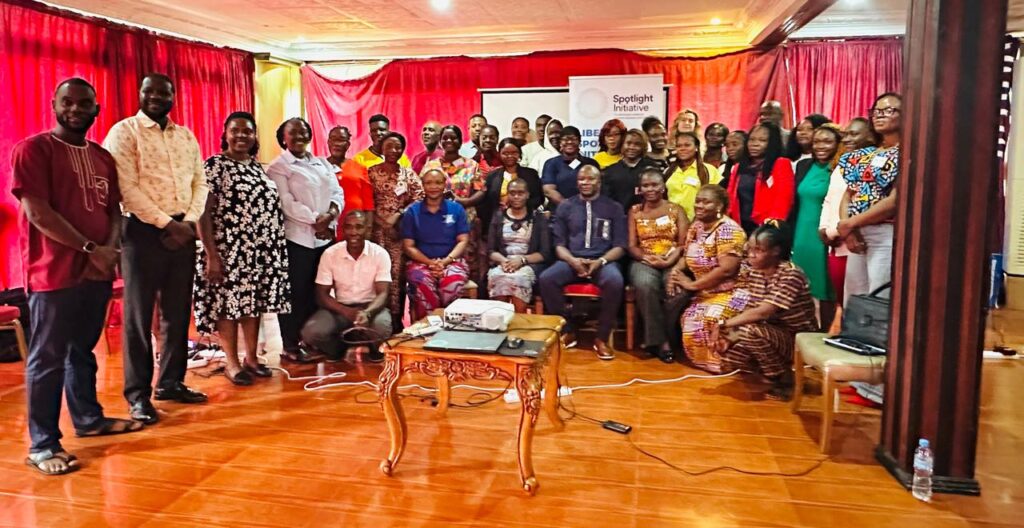
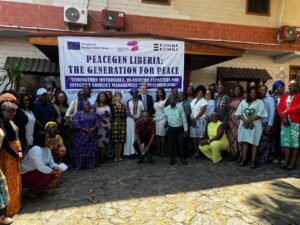
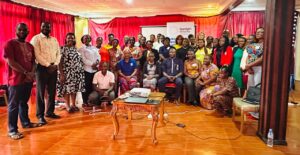
MONROVIA, Liberia — Medica Liberia has launched the Montserrado component of its nine-day SASA! Together Set-Up and Start Phase Training of Trainers, gathering government officials, civil society actors, community leaders and media practitioners to build a corps of facilitators who will roll out the SASA! Together approach across Liberia’s eight Spotlight counties.
The training, held under the Liberia Spotlight Initiative 2.0 — funded by the European Union through UN Women — brings together the first of two geographical clusters, drawing participants from Montserrado, Grand Bassa and Grand Cape Mount counties. A second cluster covering Bong, Lofa, Nimba, Grand Gedeh and Maryland counties is scheduled to convene in Bong County later in September and into October. In all, 72 participants from the eight target counties are expected to complete the training.
“Our purpose is to help build safe communities”
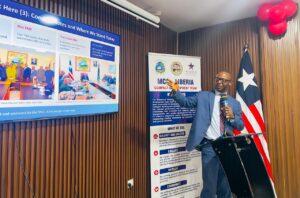
Opening the session, Medica Liberia Country Representative Cllr. Yah V. Parwon welcomed participants and thanked UN Women Liberia and the European Union for their support, along with a consultant from Raising Voices Uganda brought in to facilitate the training.
“On behalf of Medica Liberia, I’m pleased to welcome you to this set-up and start phase training of trainers,” Parwon said, describing the Spotlight Initiative 2.0 as a partnership among government, the UN, civil society and communities working toward greater safety and opportunity for women and girls.
She pressed participants to keep sight of the training’s ultimate goal rather than its formalities.
“Our purpose is not fulfilled when we complete the agenda, receive a certificate and submit our reports,” she said. “Our purpose is to help build communities where women and girls can live safely, exercise their rights and participate in decisions that affect their lives.”
Parwon explained that the SASA Together methodology centers on power — how it operates in relationships and communities, and how it can be redirected to prevent violence against women.
“SASA Together asks us to examine power, how it is used in relationships, how unequal power sustains violence against women, and how people can use that influence to support change,” she said, adding that the approach demands sustained engagement rather than one-off awareness campaigns and requires facilitators to respect the knowledge communities already hold.
She told participants they were joining “a bigger movement of SASA activists” and urged them to see themselves as professionals carrying a national responsibility.
Civil society pledges support
Several civil society representatives spoke to the training’s relevance for their own organizations. Lisa Tenneh Diasay, President of the Female Journalists Association of Liberia (FeJAL), pledged her association’s help in documenting the initiative’s impact.
“FeJAL stands ready to support Medica Liberia, especially in telling the impact stories that your work in the community look forward to,” she said.
Marian G. Deah, National Administrator of the National Coalition Against Harmful Practices (NACAHP), recalled that her organization had begun similar training in 2018 but never finished it. “Today, we are here to learn more about SASA, to know how to integrate it into the community we work,” she said, adding that NACAHP intends to apply the lessons to its work confronting harmful social norms.
Shamella E. Matthews, Executive Director of the Rising Youth Mentorship Initiative (RYMI), said the training speaks directly to her organization’s focus on young people and early behavior formation. “A lot of the things that we face when we are adults, it starts from down the roots,” she said, noting she hopes to weave SASA into RYMI’s school clubs and mentorship programs.
Alfreda Foboi Nmah, Executive Director of Helping Our People Excel (HOPE), said her organization was glad to finally complete training it had also left unfinished in 2018–2019, and plans to connect SASA to HOPE’s livelihood programs across Grand Bassa, Bomi, Maryland, Grand Kru and Grand Cape Mount counties.
UN Women: SASA central to Spotlight 2.0
Dhogba G. Mabande, Programme Analyst at UN Women Liberia, described SASA as the core methodology guiding community engagement under Spotlight Initiative 2.0’s prevention and social norms campaign.
“Under our campaign, prevention and social norms, SASA is the innovation, is the methodology, or is that approach that we are using in our community engagements,” Mabande said, linking the work to positive masculinity and broader efforts to prevent sexual and gender-based violence.
He urged trainees to engage fully over the nine days, since they will carry responsibility for the approach’s rollout. “We do not want error. We do not want disagreements in the approach that will be provided,” he said. “Every question you ask is a good question.”
Government backing
Edward E. Gboe, Spotlight Coordinator at the Ministry of Gender, Children and Social Protection, spoke on behalf of the Ministry’s leadership, who were attending the UN General Assembly.
“We take interest in the objective of the training, engaging with local communities in the response mechanism for development,” Gboe said, stressing that Liberian communities must be treated as stakeholders in decision-making, not just beneficiaries.
What’s next
By the end of the training, participants are expected to produce county-specific action plans covering stakeholder engagement, community entry, partnership-building, recruitment of Community Activists, and timelines for launching Start Phase activities. Medica Liberia says it will follow up with mentorship, coaching and field monitoring as trainees begin applying the approach in their communities.
About The Author