AFELL, Partners Conduct Training on Domestic Violence Act -For Criminal Justice Actors

February 24, 2026
Layma Kollie
Monrovia: The Association of Female Lawyers of Liberia (AFELL), in collaboration with the Community Health Care Initiative (CHI) and the Liberia Association of Psychosocial Services (LAPS), has successfully concluded a day-long training session aimed at strengthening the application of the Domestic Violence Act within Liberia’s criminal justice system.
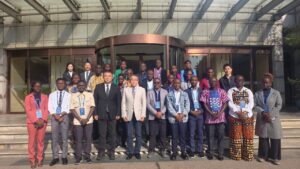
The event was held on February 25, 2026, at the King’s Hotel in Sinkor, Monrovia. The training brought together legal practitioners, law enforcement officers, and justice sector stakeholders to enhance their understanding of the Domestic Violence Act and its critical role in the investigation and prosecution of gender-based violence cases.
The initiative forms part of ongoing efforts by AFELL and its partners to ensure that survivors of domestic violence receive adequate legal protection and that perpetrators are held accountable under the law. The effort is being funded by the Danish Institute against Torture (DIGNITY).
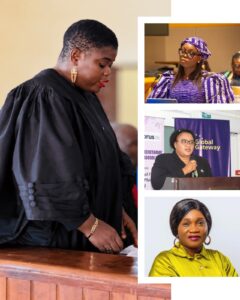
Delivering the welcome remark and overview, AFELL’s Vice President Cllr. Bowoulo Taylor Kelley called on law enforcement officers to fundamentally reshape their approach to sexual and gender-based violence (SGBV), urging them to move beyond viewing it as a “woman’s issue” and treat it as the serious crime it represents. Cllr. Kelley revealed that AFELL alone receives more than 50 reports of domestic violence every week.
“These statistics are more than numbers; they represent real lives and underscore the urgent need for effective intervention,” Cllr. Kelley stated, delivering the welcome remarks on behalf of AFELL President Cllr. Philomena Williams.
The Vice President emphasized that the increasing prevalence of sexual and gender-based violence in Liberia is a matter of grave concern. Cllr. Kelley also noted that domestic violence is rarely an isolated incident but often involves “ongoing coercive control.”
She highlighted the critical need for comprehensive training that enables officers to recognize non-physical forms of abuse, such as economic and emotional manipulation, and to understand the profound psychological barriers that prevent victims from seeking help or cooperating with prosecutions.
According to her, the urgency of the training is underscored by alarming national data. Cllr. Kelley cited a recent United Nations report, noting that 60% of Liberian women aged 15 to 49 have experienced physical violence, and one in ten has suffered sexual violence. These abuses, she explained, inflict profound and lasting harm, not only on individual survivors but on the entire social fabric. “Gender-based violence produces far-reaching economic, social, and developmental consequences.
It perpetuates gender inequality, reinforces harmful societal norms, and stifles the growth and potential of entire communities,” she told her audience. Cllr. Kelley reminded the law enforcement officers that they are the crucial first line of defense in a system that must prioritize survivor safety and perpetrator accountability.
“Addressing this issue is essential to fostering a safer and more equitable Liberia.” She urged them to adopt proactive, victim-centered approaches that move beyond reactive responses to incidents. “Domestic violence, particularly sexual and gender-based violence, must be recognized as a serious crime, not merely a woman’s issue, and treated accordingly.
Your dedication and service are crucial to the successful implementation of the Domestic Violence Act and to advancing justice in Liberia. The impact of your actions, whether taken or omitted, can be lasting and transformative for victims and survivors,” Cllr. Kelley stressed.
The core of the training was divided into technical sessions designed to equip law enforcement officers and legal practitioners with the necessary tools. Subsequent sessions featured the critical role law enforcement plays in gathering and preserving evidence.
Following a robust question-and-answer period, attendees were guided on using a human rights-based approach when interacting with survivors of domestic violence. The
Association of Female Lawyers of Liberia (AFELL) was founded as a non-profit, non-governmental, and non-political entity on February 10, 1994, during the height of Liberia’s civil crisis.
It was established in response to the collapse of the legal system, which had left women and children extremely vulnerable to abuse and injustice. Over the past three decades, AFELL has grown into the country’s premier organization championing gender equality and access to justice.
About The Author