African Church Urged to “Enlarge, Engage and Endure” as Bishops’ Annual Meeting Opens in Liberia
Farmington, September 1, 2026 — The African Church has been challenged to broaden its vision, deepen ecumenical partnerships and build stronger institutions capable of sustaining its mission for generations to come.
The call was made by Rev. Dr. Samuel B. Reeves Jr., President of the Liberia Council of Churches (LCC), President of the Liberia Baptist Missionary and Educational Convention (LBMEC), and Senior Pastor of Historic Providence Baptist Church, in his keynote address at the annual meeting of the Africa College of Bishops in Monrovia.
Speaking under the theme, “Enlarge. Engage. & Endure: Deepening Ecumenical Engagement, Expanding Continental Influence, and Strengthening Institutional Sustainability,” Dr. Reeves urged church leaders to move beyond meetings and declarations and translate Christian unity into practical action across the continent.
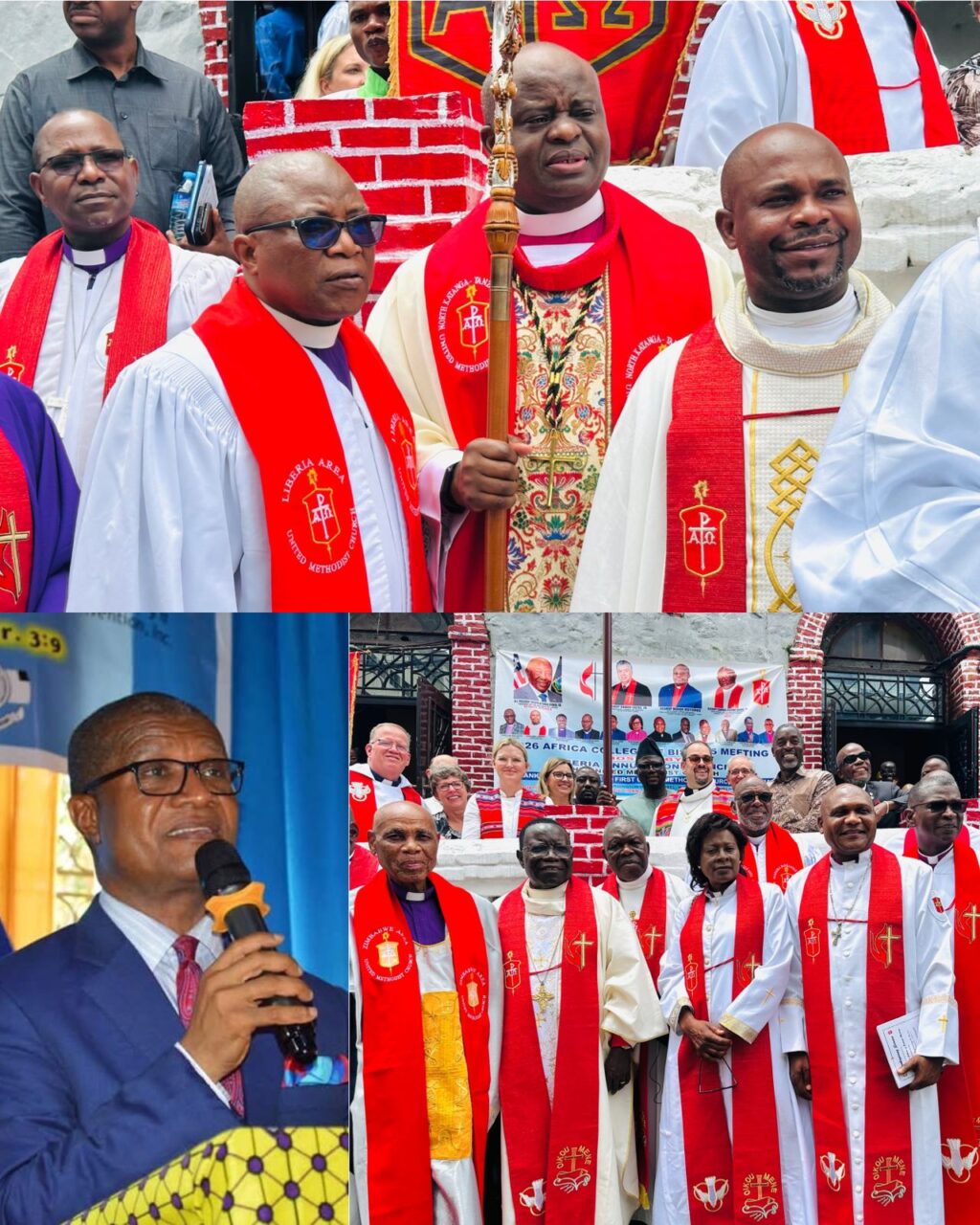
The annual meeting of the Africa College of Bishops is being hosted in Margibi, Republic of Liberia, by the Liberia Annual Conference of The United Methodist Church from August 31 to September 4, 2026.
The gathering has brought together more than 200 participants from Africa, the United States and Europe, including bishops and church leaders from the Catholic, Episcopal, United Methodist and other Christian traditions.
The meeting’s theme places emphasis on strengthening cooperation among churches while expanding their contribution to Africa’s social, spiritual and institutional development.
Drawing from Isaiah 54:2, he challenged the bishops to embrace the biblical commands to “enlarge the tent,” “stretch the curtains,” “do not hold back,” “lengthen the cords,” and “strengthen the stakes.”
“We are not here merely to hold another meeting. We are here to ask what God is asking the African Church to do with the future,” Dr. Reeves said.
He said Liberia’s history of conflict, loss, reconstruction and resilience gives particular meaning to the message of Isaiah, emphasizing that the country’s past should not be allowed to determine its future.
“Liberia knows what it means to survive history,” he said. “Yesterday can wound us without having the authority to define tomorrow.”
A call to enlarge the Church’s vision
Dr. Reeves said the rapid growth and changing realities of Africa require the Church to expand its vision and embrace the continent’s emerging opportunities.
He pointed to the growth of congregations, the increasing role of young people and women, academic scholarship, entrepreneurship and the search for moral and spiritual direction as signs of what he described as an extraordinary moment for the African Church.
“Africa is not merely receiving Christianity’s future. Africa is helping shape it,” he declared.
He called for greater investment in African theological institutions, emerging leaders and women, while urging churches to expand their contribution to education, healthcare, entrepreneurship, peacebuilding, governance and human development.
According to Dr. Reeves, enlargement should not be pursued merely for institutional growth, but to create space for people to encounter Christ, young people to discover their vocation and communities to experience meaningful service from the Church.
From ecumenical conversation to collective action
The keynote speaker also challenged Christian denominations to make ecumenism more practical and results-oriented.
He noted that issues such as poverty, violence, migration, climate vulnerability and youth unemployment do not recognize denominational boundaries, making collaboration among churches essential.
“Christian unity cannot and must not remain a beautiful sentence in an eloquent prayer,” he said.
He called on bishops and church institutions to work across borders in areas including peacebuilding, theological education, humanitarian services, climate resilience, youth development, reconciliation and ethical governance.
Dr. Reeves outlined a progression for the Church: “Conversation must lead to collaboration. Collaboration must lead to coordination. Coordination must lead to collective action.”
He further challenged church leaders to measure their influence by the transformation they produce in society.
“If a young person receives an education, our influence matters,” he said. “If a conflict ends because Christian leaders helped people find peace, our influence matters.”
He urged churches to pay particular attention to Africa’s youthful population, saying young Africans are already shaping the continent through technology, business, science, education, culture, politics, media and civil society.
Sustainability requires stronger foundations
Turning to institutional sustainability, Dr. Reeves said a larger tent requires stronger stakes, warning that greater influence must be matched by stronger governance, stewardship, leadership and integrity.
He called for greater financial transparency, accountable governance, disciplined planning, responsible investment, entrepreneurship, endowment development and strategic partnerships.
“The African Church needs a deeper culture of ownership,” he said, stressing that while external partnerships can assist the Church, African institutions must also develop their own internal capacity to generate, manage and invest resources.
He also challenged bishops to prioritize succession planning and mentorship.
“Every bishop should eventually face one question: Who will be ready because I served here?” he asked.
For Dr. Reeves, the measure of a leader’s legacy is not simply what is accomplished during his or her tenure, but whether future leaders are adequately prepared to continue the work.
He further urged the Church to embrace innovation, including the responsible use of artificial intelligence, digital education, improved communication, data and contemporary approaches to fundraising.
“Make room” for the next generation
As he closed his address, Dr. Reeves returned to his central message, urging the African Church to leave Monrovia with concrete commitments.
He called on bishops to leave with broader vision, churches with deeper partnerships and institutions with stronger plans, while ensuring that young leaders and women know they have a place in the future of the Church.
“Let us leave differently,” he said.
His final charge was captured in three words: Enlarge. Engage. Endure.
“Enlarge the vision with humility. Engage the world with courage. And endure beyond ourselves with integrity,” he declared.
He challenged the gathering to ensure that Africa’s churches become institutions capable of generating wisdom, service, opportunity and hope.
“The God who carried us through yesterday has not run out of tomorrow,” Dr. Reeves said. “The question is whether we will make room for it.”
Bishops urged to give back and invest in sustainability
Other speakers at the gathering reinforced the need for the Church to translate its spiritual mandate into tangible societal impact.
The Archbishop of Monrovia, Most Rev. Dr. Gabriel Blamo Snosio Jubwe, said the time has come for bishops to give back to society what has been entrusted to them.
He stressed that giving back should go beyond immediate interventions to creating systems that produce lasting sustainability and impact.
Archbishop Jubwe also reaffirmed the Catholic Church’s commitment to collaboration with other Christian traditions, emphasizing the importance of Christians standing together and seeking collective success.
“We stand with Christians and win together,” was the thrust of his message as he underscored the importance of Christian unity and shared action.
Associate Justice Jamesetta Wolokollie meanwhile called on the Church to pay closer attention to Africa’s youthful population, warning that the lack of love and care in society could have serious consequences for the next generation.
“Let’s focus on the young people, they need love and leadership,” she urged.
Her remarks added a strong social dimension to the gathering’s broader call for the Church to prepare young people for leadership and ensure that its influence extends beyond the walls of religious institutions.
The gathering is providing church leaders with an opportunity to reflect on the future role of Christianity on the continent and the responsibility of today’s leaders to build institutions capable of serving generations yet to come.
About The Author