Ex-Pres. Sirleaf Urges Swift Action on Specialized Anti-Corruption Court
June 30, 2026
By Laymah Kollie
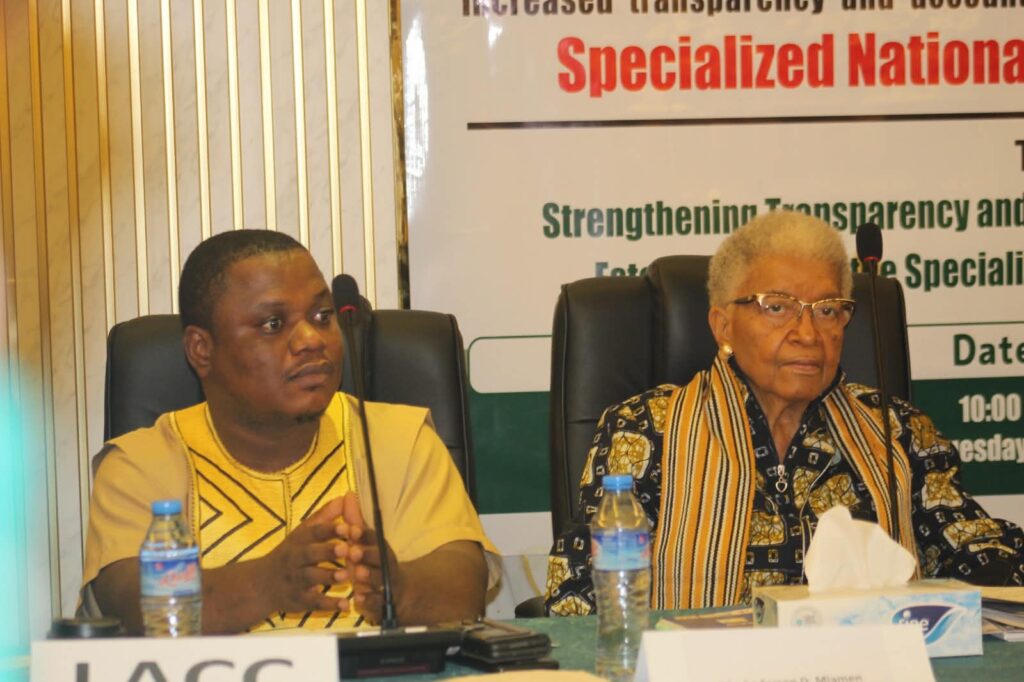
Monrovia: Former President Ellen Johnson Sirleaf has called on Liberia’s three branches of government, civil society, the private sector and citizens to unite behind the establishment of a Specialized National Anti-Corruption Court, warning that the country’s fight against corruption will remain ineffective unless those accused of corruption are swiftly prosecuted and held accountable.
Delivering the keynote address Tuesday at the National Anti-Corruption Policy Dialogue in Monrovia, Sirleaf said Liberia has built several accountability institutions over the years, but the absence of a dedicated court to efficiently prosecute corruption cases continues to undermine public confidence in the justice system.
“We built institutions, but we did not change the minds and attitudes. An Anti-Corruption Commission that investigates but cannot see prosecutions through to conviction is a Commission that ensures the Nation audits its accounts but does not consistently follow through to punish those who steal. It is a nation that diagnoses the disease but fails to administer the cure.” Sirleaf declared.
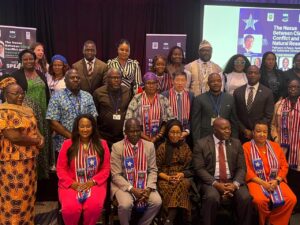
The dialogue, held under the theme, “Strengthening Transparency and Accountability in Liberia through the Establishment of a Specialized National Anti-Corruption Court,” was organized by the Center for Transparency and Accountability in Liberia (CENTAL) in partnership with the Liberia Anti-Corruption Commission (LACC) and the Office for the Establishment of the War and Economic Crimes Court for Liberia (OWECC-L), with support from the Embassy of Ireland.Reflecting on her administration, Sirleaf recalled inheriting a country in 2006 where corruption had become deeply entrenched in public service.
“When I took the Presidential Oath of Office in January 2006, Liberia was a nation where corruption was largely the operating system. Public office had become, for too many, a license for personal extraction rather than an obligation to serve,” She said.
She noted that her administration responded by strengthening public accountability institutions, including the Liberia Anti-Corruption Commission, the Internal Audit Agency, the Public Procurement and Concession Commission, the General Auditing Commission, the Financial Intelligence Agency and initiatives that opened the national budget to greater public scrutiny.
However, Sirleaf acknowledged that institutional reforms alone have not been enough.“My administration was not perfect and my legacy on this issue is unfinished. We built institutions of accountability, but corruption cases too often fail to reach credible conclusions,” she admitted.
According to the former Liberian leader, one of the greatest weaknesses in Liberia’s anti-corruption architecture is that corruption cases frequently become delayed after entering the regular court system.“A case is investigated. Evidence is gathered.
Public expectations rise. And then the matter enters our court system, where it competes for attention with the full range of civil and criminal matters. Too often, cases lose momentum, continue indefinitely, or quietly disappear from the docket altogether.”
She warned that such delays have created a credibility crisis. Stressing that Citizens come to believe that corruption is investigated but never punished, and that belief is a form of corruption’s victory.
Ex-Pres. Sirleaf said establishing a Specialized National Anti-Corruption Court would complete Liberia’s accountability framework by ensuring corruption cases are handled fairly, competently and without unnecessary delays.“What a specialized anti-corruption court would do is complete the system by strengthening its enforcement arm, ensuring that evidence gathered through investigations and cases built by prosecutors can be adjudicated fairly, competently and without undue delay.”
She emphasized that the proposed court should not be viewed as the responsibility of a single administration, but a national infrastructure project that is important to the development as roads, electricity and other physical and social infrastructure necessary for sustainable economic growth and a mature democracy.
The former President also welcomed ongoing efforts to establish the War and Economic Crimes Court, describing it as a complementary judicial process that should remain independent of political interference and adequately resourced.
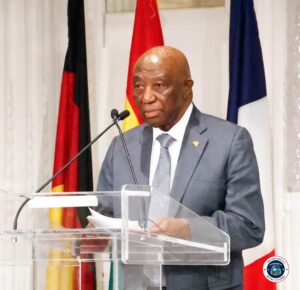
Addressing Liberia’s current leadership, Sirleaf urged President Joseph Boakai to give priority attention to the proposed legislation establishing the Specialized National Anti-Corruption Court.“We therefore call on the President to treat the request for the Specialized Court with the seriousness it deserves and to take the necessary corrective executive action.”
She also challenged the Supreme Court to improve the performance of the judiciary.
About The Author