UNFPA, Sweden Embassy Honored as Amplifying Rights Network Closes Five-Year SRHR Project
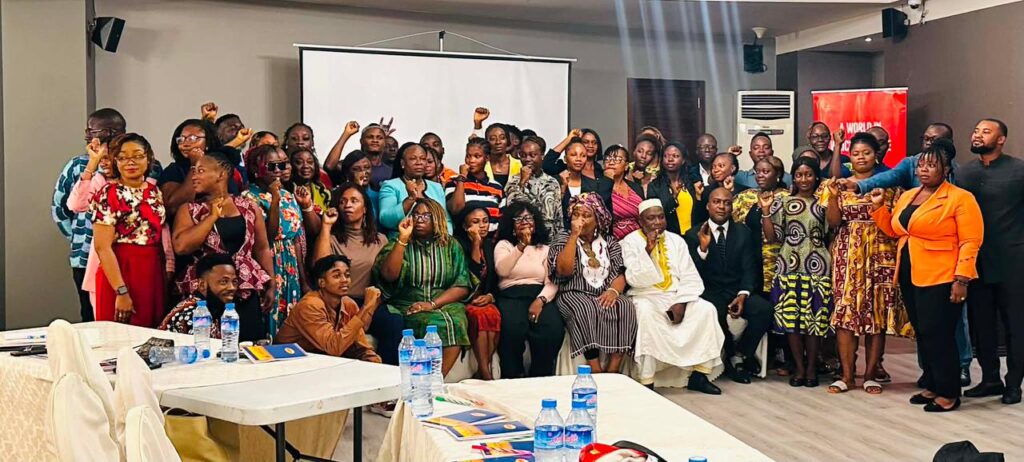
MONROVIA, June 30,2026: The Amplifying Rights Network (ARN) has honored the United Nations Population Fund (UNFPA) and the Embassy of Sweden in Liberia for their unwavering support to sexual and reproductive health and rights (SRHR) advocacy as the network officially concluded its five-year “Amplifying Voices” project.
The recognition came during the project’s closeout ceremony in Monrovia, where representatives of both institutions received awards acknowledging their financial, technical and strategic contributions to strengthening sexual and reproductive health and rights advocacy across Liberia from 2021 to 2026.
Receiving the award on behalf of UNFPA, Hon. Leonard Kamugisha, Deputy Representative of UNFPA Liberia, described the recognition as a testament to the determination of Liberian civil society organizations that have championed reproductive health rights despite numerous challenges.
“We’ve seen remarkable progress when it comes to advancing sexual and reproductive health and rights in Liberia, particularly being driven by civil society organizations,” Kamugisha said. “As UNFPA, we are very proud to have been associated with the Amplifying Rights Network throughout the implementation of this project.”
He praised the network for successfully organizing national SRHR conferences over the years, saying they demonstrated the capacity of Liberian civil society to lead meaningful national conversations on issues affecting women, girls and young people.
“The conferences showed that civil society is a key pillar to national development, and no country should ever underestimate its capacity and competencies,” he added.
Earlier, another UNFPA representative encouraged members of the network to sustain community awareness activities even as the project comes to an end.
“While you are waiting for funding, continue informing communities, adolescent girls and young women about available reproductive health services and contraceptives,” the representative urged. “The day we stop talking is the day we stop making progress.”
The Embassy of Sweden, which financed the project through the Swedish Association for Sexuality Education (RFSU), also received an award recognizing its longstanding commitment to advancing human rights and gender equality in Liberia.
Receiving the honor on behalf of the Swedish Embassy, Madam Dwede Tarpeh, National Program Officer for Democracy and Human Rights, commended the network for building what she described as more than an organization.
“I want to congratulate you on building a movement. It’s not just a network,” Tarpeh said. “You have allowed Sweden to meet its strategic objectives in ways we never imagined. What you have given to the women, girls and young people of Liberia is incalculable.”
She said the achievements of ARN had been elevated to Sweden’s development authorities in Stockholm as an example of locally driven development success.
“There are literally thousands of young people who today have more knowledge and greater agency over their lives than they had three years ago, and nobody can take that away from you,” she noted.
Tarpeh also encouraged the network to preserve the partnerships and solidarity established during the life of the project.
“The money will come and go, but the collaboration, the knowledge and the solidarity you have built together—that is sustainability,” she emphasized.
During the program, Madam Aminata Kamara, Head of RFSU Liberia, delivered a comprehensive reflection on the project’s implementation, impact and future direction.
Kamara explained that the initiative emerged in response to Liberia’s high maternal mortality rate, widespread gender-based violence, female genital mutilation, teenage pregnancy and limited access to accurate sexual and reproductive health information, particularly among young people and marginalized communities.
She noted that the project, funded by Sweden and implemented through RFSU between 2021 and 2026, united ten civil society organizations under the Amplifying Rights Network to strengthen collective advocacy on sexual and reproductive health and rights.
According to Kamara, the project helped place SRHR issues at the center of national discourse, organized Liberia’s first national SRHR conference, strengthened youth leadership, promoted policy advocacy and ensured that persons with disabilities, rural women and other marginalized groups were included in national conversations on reproductive health and human rights.
Looking ahead, she said the network intends to continue advocating for policy reforms, expand menstrual health initiatives and strengthen youth-led advocacy to sustain the gains made over the past five years.
One of the ceremony’s most emotional moments came when Hannah Kerkulah, a young woman from Bong County, shared her personal journey.
She recalled becoming pregnant at an early age without adequate sexual health information and attempting to terminate the pregnancy through dangerous traditional methods because she lacked knowledge and support.
Through the project’s training and mentorship, however, Kerkulah said her life took a different direction. She later became a youth leader, established peer education groups for adolescent girls and young women, and now mentors others to make informed decisions about their bodies and education.
“Today, many girls in my community are staying in school and making their own decisions,” she said. “They can now tell their parents they want to finish school before getting married.”
Another network member, Nowai Karsei of the Rural Women Rights and Care Foundation, described the project as transformative for rural communities where discussions about sexuality had long been considered taboo.
She said joining ARN demonstrated the power of collective advocacy.
“When I joined the network, I realized there is power in unity. If one organization is attacked, the entire network stands with it,” she said, adding that continued awareness and decentralized reproductive health services remain critical for women and girls in rural Liberia.
The five-year Amplifying Voices project concluded with stakeholders reaffirming their commitment to sustaining advocacy for sexual and reproductive health and rights despite funding uncertainties.
As awards were presented to UNFPA and the Swedish Embassy, organizers described the recognition as a symbol of appreciation for partners whose support helped transform a coalition of ten organizations into one of Liberia’s leading voices for reproductive rights, gender equality and human rights.
About The Author