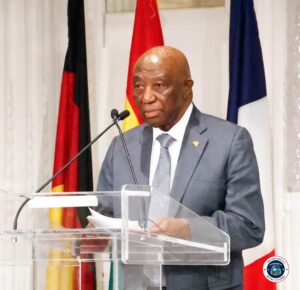
𝐂𝐨𝐮𝐫𝐭 𝐃𝐞𝐧𝐢𝐞𝐬 𝐅𝐨𝐫𝐦𝐞𝐫 𝐕P 𝐓𝐚𝐲𝐥𝐨𝐫’𝐬 𝐌𝐨𝐭𝐢𝐨𝐧 𝐓𝐨 𝐀𝐝𝐦𝐢𝐭 𝐁𝐚𝐢𝐥 𝐢𝐧 𝐃𝐫𝐮𝐠 𝐂𝐚𝐬𝐞

September 24, 2026
The Assigned Circuit Judge of Criminal Court “C” at the Temple of Justice, Judge Ousman F. Feika, has denied former Vice President Jewel Howard-Taylor’s motion to be admitted to bail, effective immediately.
The motion stemmed from her arrest and subsequent detention by national security on allegations of involvement in drug-related activities in violation of the Controlled Drugs and Substances Act of 2023.
Among those charges, according to the police charge sheet, are Importation of Controlled drugs, Unlicensed exportation of Controlled drugs and substances, Unlicensed sales, Trading In- Transit and transportation of Controlled Substances, Abuse of office, illicit trafficking, Criminal Conspiracy, Criminal solicitation, Money laundering, and Aiding the consummation of a crime.
In her motion, Defendant Taylor argued that the allegations in the writ of arrest pertain exclusively to events alleged to have occurred in 2021 and 2022. She contended that prosecuting her under the 2023 Act for alleged crimes committed before its enactment violates Article 21(a) of the Liberian Constitution, which prohibits ex post facto laws.
Article 21 (a) of the Liberian Constitution states that “No person shall be made subject to any law or punishment which was not in effect at the time of commission of an offense, nor shall the Legislature enact any bill of attainder or ex post facto law” State prosecutors resisted, asserting that Taylor’s criminal conduct extended beyond 2021–2022 and continued through August 2026, thereby falling within the scope of existing laws on the trafficking and sale of controlled substances.
Delivering his ruling on Thursday, September 24, 2026, Judge Feika held that the mere commencement of alleged criminal conduct in 2021–2022 does not render the prosecution time-barred if the writ alleges and the prosecution can prove that the conduct continued through August 2026.
Judge Feika relied on Chapter 4, section 4.6 of the Criminal Procedure Law, which provides that an offense shall have been committed when the last act or event which is a necessary element of the offense has occurred; provided that, where it is the clear legislative intent to proscribe a continuing course of conduct, the offense shall have been committed when the last act of that course of conduct has occurred or when the defendant has terminated his complicity therein.He emphasized that the alleged money-laundering transactions through August 2026 fall within the statutory limitation period and are not time-barred even if the proceeds originated from earlier criminal conduct beginning 2021-2022.
“The motion to admit to bail on statute-of-limitation grounds is therefore denied, without prejudice to the defendant’s right at trial to challenge whether the prosecution has established the elements of each charged offense,” Judge Feika stated.
About The Author