FEJAL Photo Exhibition Rekindles National Dialogue on Peace, Justice and Liberia’s History
By: Laymah Kollie
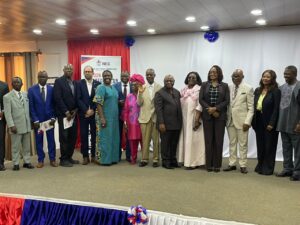
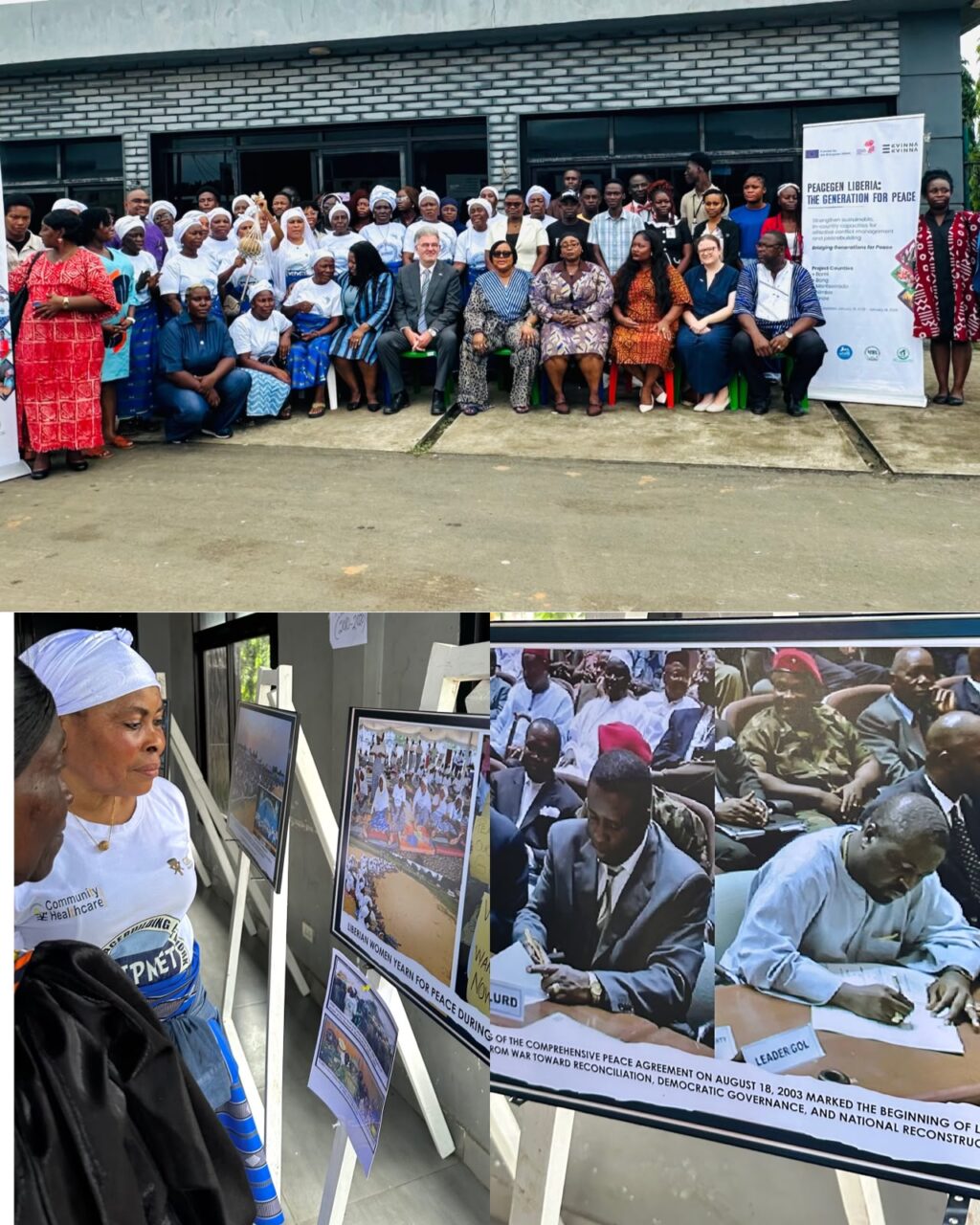
MONROVIA, July 29, 2026 – The Female Journalists Association of Liberia (FeJAL), in collaboration with partners under the PeaceGen Liberia Project, on Wednesday hosted a photo exhibition that brought together government officials, civil society organizations, journalists, youth leaders, survivors of the civil war, and development partners to reflect on Liberia’s journey from conflict to peace and renew calls for justice and national reconciliation.
Held at the Women in Peacebuilding Network (WIPNET) Peace Hut in Invincible Park, the exhibition, titled “Liberia’s Next Chapter: A Photo Exhibition on Justice, Peace, and Renewal,” used powerful photographs, historical archives and survivor-centered stories to document Liberia’s painful past while inspiring hope for a peaceful future.
The exhibition formed part of the PeaceGen Liberia: The Generation for Peace Project, a three-year initiative funded by the European Union and co-funded by the Embassy of Ireland. It is implemented by a consortium comprising the Kvinna till Kvinna Foundation (KTK), the Women NGO Secretariat of Liberia (WONGOSOL), FeJAL, the Association of Female Lawyers of Liberia (AFELL), the Alliance for Peace, Justice and Human Rights (APJHR), and the National Young Women’s Political Council of Liberia (NYWPCL), with support from the Office for the Establishment of the War and Economic Crimes Court (OWECC).
Speaking during the opening ceremony, Kvinna till Kvinna Program Manager Mrs. Agiechie Comfort Baysah described the project as a youth-centered peacebuilding initiative aimed at strengthening reconciliation and promoting transitional justice across Liberia.
Baysah said. “We are working with young people to build their capacity and provide platforms for them to actively participate in Liberia’s peace and reconciliation process.”
She explained that the project operates in Montserrado, Bong, Bomi, Sinoe and Nimba Counties and focuses on three major pillars, such as: capacity building, transitional justice and advocacy.
According to her, the exhibition itself serves as a public advocacy tool designed to encourage Liberians to confront their history and become active participants in the country’s healing process.
“This exhibition is a means of advocating for sustainable peace in Liberia. We want everyone to see themselves in our shared history and understand that peacebuilding is not only the responsibility of the older generation. Young people have key roles to play in shaping Liberia’s future,” Baysah emphasized.
Representing the Liberia Coalition on Youth, Peace and Security, Gabriel Sau Tubay shared a deeply personal account of how Liberia’s civil conflict disrupted the lives of ordinary families.
“My own mother’s dream was interrupted because of the civil conflict,” Tubay recounted. “Her story reminds us that the war affected every Liberian family in one way or another.”
He stressed that young people must move beyond being viewed merely as future leaders and instead be recognized as peacebuilders today.
“Young people are not just the leaders of tomorrow; they are peacebuilders today, in our communities, in our homes and in every space we occupy. When we invest in young people, we invest in Liberia’s future,” he said.
The exhibition coincided with the anniversary of the 1990 massacre at St. Peter’s Lutheran Church, one of the darkest chapters of Liberia’s civil war.
Speaking on behalf of the Liberia Massacre Survivors Association (LAMASA), Benedict T. Sonyah reflected on the significance of the day and called for greater urgency in implementing transitional justice measures.
He expressed concern over possible delays in establishing the country’s War and Economic Crimes Court, warning that political developments could derail ongoing efforts.
“The issue of transitional justice requires all of us to work together, Civil society, the government and our partners must collaborate to ensure that justice remains a national priority and does not become a casualty of political calculations.” Sonyah said.
Furthermore, the President of the Press Union of Liberia (PUL), Julius Kanubah, praised FeJAL and its partners for preserving Liberia’s history through photography.
“Today’s exhibition demonstrates how historical narratives can help us understand where we have come from and where we want to go as a nation,” Kanubah said.
He reaffirmed the PUL’s commitment to supporting initiatives that promote accountability, democracy and justice.
“We remain committed to working with our partners, including FeJAL, in advancing justice in Liberia. If meaningful progress is not made soon toward establishing the War and Economic Crimes Court, political calculations may undermine these important national efforts,” Kanubah cautioned.
Delivering remarks on behalf of the Office for the Establishment of the War and Economic Crimes Court (OWECC), Cllr. Asatu Bah Kenneth, Director for the Anti-Corruption Court, welcomed the partnership and described the WIPNET Peace Hut as a place of profound historical significance.
“This is sacred ground,” she said, recalling how Liberian women of different faiths gathered at the site during the civil war to pray for peace.
She recounted that while women were praying at the Peace Hut, former President Charles Taylor was indicted by the Special Court for Sierra Leone in 2003, describing the moment as symbolic of the power of collective action.
Cllr. Kenneth praised President Joseph Nyuma Boakai for supporting efforts toward the establishment of the War and Economic Crimes Court and urged Liberians to reject the notion of ignoring past atrocities.
“Justice must prevail, we cannot simply say ‘let bygones be bygones’ without acknowledging the suffering of victims. More than 250,000 Liberians lost their lives during the civil war. We owe it to them to pursue justice.”
She called for a moment of silence in honor of those who died during the conflict, reminding participants that peace must be built on truth, accountability and remembrance.
Beyond the exhibition itself, participants interacted with the Peace Reflection Wall, Peace Letter Box Archive and Memorial Line, where visitors shared personal reflections and messages of hope for Liberia’s future.
The exhibition concluded with renewed calls for stronger public support for transitional justice, youth participation in peacebuilding, and the preservation of Liberia’s historical memory as essential pillars for achieving lasting peace and national renewal.
About The Author