From Survival to Growth, Liberia Pushes to Expand Financial Access for Women
By: Lazota Bility
For generations, many Liberian women have turned small businesses into a means of survival, using their businesses to feed their families, pay school fees, and support their communities.
From women selling peanuts along roadsides and in markets to farmers and owners of small enterprises, their determination has helped sustain households and contributed significantly to Liberia’s economy. Yet, despite their contributions, many continue to face barriers to formal financial services that could help their businesses grow.
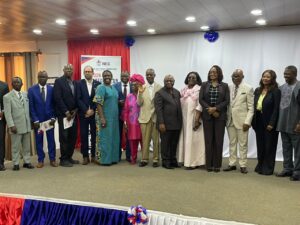
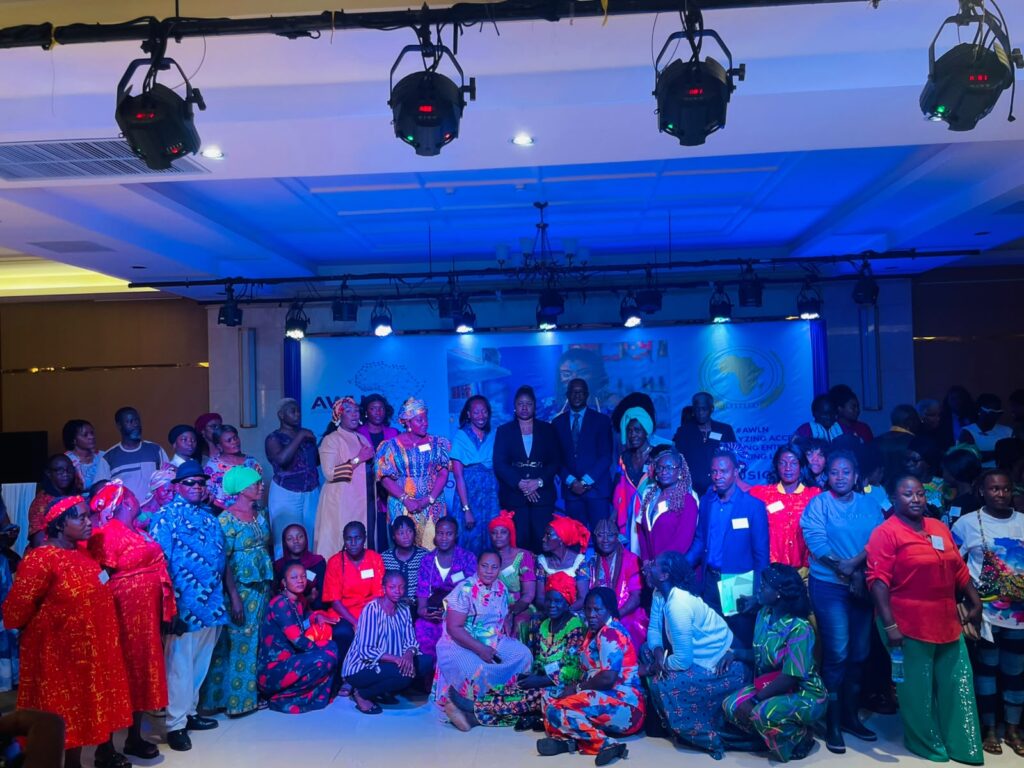
Recognizing the contributions and challenges facing women entrepreneurs, the African Women Leaders Network (AWLN) Liberia Chapter, in partnership with the Central Bank of Liberia (CBL), UN Women, UNDP and other partners-convened a two-day national conference on Women’s Financial Inclusion.
The event, which is taken place from July 29-30, 2026 is being held under the theme “Women’s Financial Inclusion as a National Economic Growth Strategy,” bringing together 200 participants from diverse backgrounds including legislators, government officials, financial institutions, development partners, entrepreneurs, women leaders, and businesswomen from across Liberia to discuss practical solutions for expanding women’s access to finance.
Providing an overview of the conference, Madam Lillian L. Best, Co-Lead of the Financial Inclusion Pillar of AWLN Liberia, said the gathering focused on identifying practical solutions that would help women gain greater access to financial services.
She said participants will engage commercial banks, mobile money providers, insurance companies, and other financial institutions to discuss challenges affecting women’s financial inclusion and explore possible solutions.
Delivering remarks at the conference, Senator Amara Konneh reflected on the resilience of Liberian women by sharing the story of his mother who used a small business to support her family.
“I saw a woman who used peanut to support her entire family. That’s not weakness; that’s strength,” Senator Konneh said.
He recalled that his mother sold peanuts in Firestone and Waterside for years while he was a child, describing her determination as a reflection of the strength demonstrated by many Liberian women.
“My mother never gave out her table,” he said, noting that thousands of women across Liberia continue to rely on small businesses to provide for their families through difficult circumstances.
Beyond sharing his mother’s story, Konneh said strengthening women’s financial inclusion requires reforms that allow informal businesses to transition into the formal economy.
He disclosed that he is building support for a bill that would simplify business registration for micro and small enterprises, allowing thousands of informal businesses to gain legal recognition. “I already have 8 senators I’m stay lobbying to have more to joined me in the process “
According to Konneh, formal registration would enable entrepreneurs to open business bank accounts, establish credit histories, and access formal financing instead of depending mainly on grants and other savings arrangements.
The proposed legislation would also establish an Informal Economy Development Fund to expand financing opportunities for micro and small businesses, many of which are owned by women.
At the same time, Deputy Minister for Gender, Children and Social Protection, Atty. Laura Golakeh, called for concrete action to ensure women have greater access to financial opportunities, stressing that discussions alone will not address the challenges women entrepreneurs continue to face.
“We are here to talk, and we are here to take action,” she said.
Golakeh reaffirmed the Ministry’s commitment to promoting women’s economic empowerment through initiatives supporting women farmers and entrepreneurs. Stressing, that government cannot achieve financial inclusion alone.
“Government cannot do it alone. It will take collaboration to create opportunities where women have access to financial inclusion”.
Furthermore, World Bank Country Manager Madam Georgia Wallen described women as key contributors to Liberia’s economic growth, noting their role in agriculture, trade, and other sectors.
Acknowledging that despite women’s contribution to the economy, many continue to face limited access to bank accounts and formal financial services.
She highlighted the World Bank continued support for programs and reforms aimed at expanding women’s economic opportunities, including the Liberia Women’s Empowerment Project (LWEP), which has supported women in communities across Liberia.
Delivering the keynote address, James B. Wilfred, Deputy Governor of the Central Bank of Liberia defined women as a major strength of Liberia’s private sector, attesting that they have consistently demonstrated resilience and determination despite barriers to financial inclusion.
He noted that long before formal financial services became widely available, Liberian women had already created their own financial networks to support their families and businesses. “Liberian women have already demonstrated both resilience and determination.
While acknowledging progress made in expanding women’s participation in the financial sector, the Governor cautioned that the gains should not be viewed as the final destination.
“We should celebrate, but we should not mistake it for arrival. There is still room to grow, and there are still major gaps that must be addressed,” he said.
He urged financial institutions, policymakers, development partners, and the private sector to continue working together to remove barriers preventing women from fully participating in Liberia’s economic development.
The conference also featured a panel discussion on critical national topics highlighting land ownership and the building a collateral system.
The session, moderated by Madam Ellen O. Pratt Harris, Executive Director of the Ellen Johnson Sirleaf Presidential Center for Women and Development, examined how land ownership affects women’s ability to access loans and grow their businesses.
Panelists agreed that limited land ownership, inadequate documentation, and cultural practices continue to prevent many Liberian women from using land as collateral to obtain credit.
Hon. Fatima Sirleaf, Deputy Minister for Urban Affairs at the Ministry of Local Government, said the government is increasing awareness through the Decentralization Act to help women understand their land rights and the importance of proper land documentation.
Adding, that although many families own land, deeds are often registered in the names of male relatives, making it difficult for women to use land as collateral.
Representing the banking sector, Mr. Duyan Mulbah, Deputy Director for Bank Surveillance at the Central Bank of Liberia, said financial institutions are working with communities to recognize customary land ownership and expand community banking services to reduce barriers to finance.
Another panelist, Florence Malorbah Dorley, Land Tenure and Natural Resources Specialist, confirmed Liberia is moving from policy discussions toward practical action on women’s land rights. She called for stronger verification systems for land documents presented as collateral and urged continued public education on financial literacy and women’s equal rights to own property.
Julius B. Kawa, Director of Land Policy and Planning at the Liberia Land Authority, identified poor documentation and cultural traditions as major obstacles to women’s land ownership. He encouraged women to ensure their full names are included on land deeds to avoid ownership disputes and improve their chances of accessing credit.
The panel concluded that improving women’s property rights, strengthening documentation systems, expanding financial literacy, and increasing awareness will be critical to ensuring more women can access finance and build sustainable businesses.
The conference comes at a time when women continue to play a vital role in Liberia’s economy through agriculture, trade, manufacturing, services, and other sectors.
According to the Central Bank of Liberia’s 2025 report, women’s access to credit increased to 25 percent, compared with no recorded female participation in credit transactions in 2024.
Established in 2017 by the African Union Commission, UN Women, and partners, the African Women Leaders Network (AWLN) works to promote women’s leadership, economic empowerment, gender equality, and women’s participation in decision-making across Africa.
Through the AWLN Liberia Chapter, the network continues to advocate for greater access to finance, leadership opportunities, and social empowerment for women.
About The Author