Stakeholders Push for Comprehensive Review of Liberia’s Mining Law
By: Lazota Bility
Monrovia, July 9,2026: Stakeholders in Liberia’s mining sector are calling for a comprehensive review of the country’s Mining and Minerals Law, arguing that the existing legal framework must be updated to address emerging challenges, strengthen governance, and promote sustainable growth in the sector.
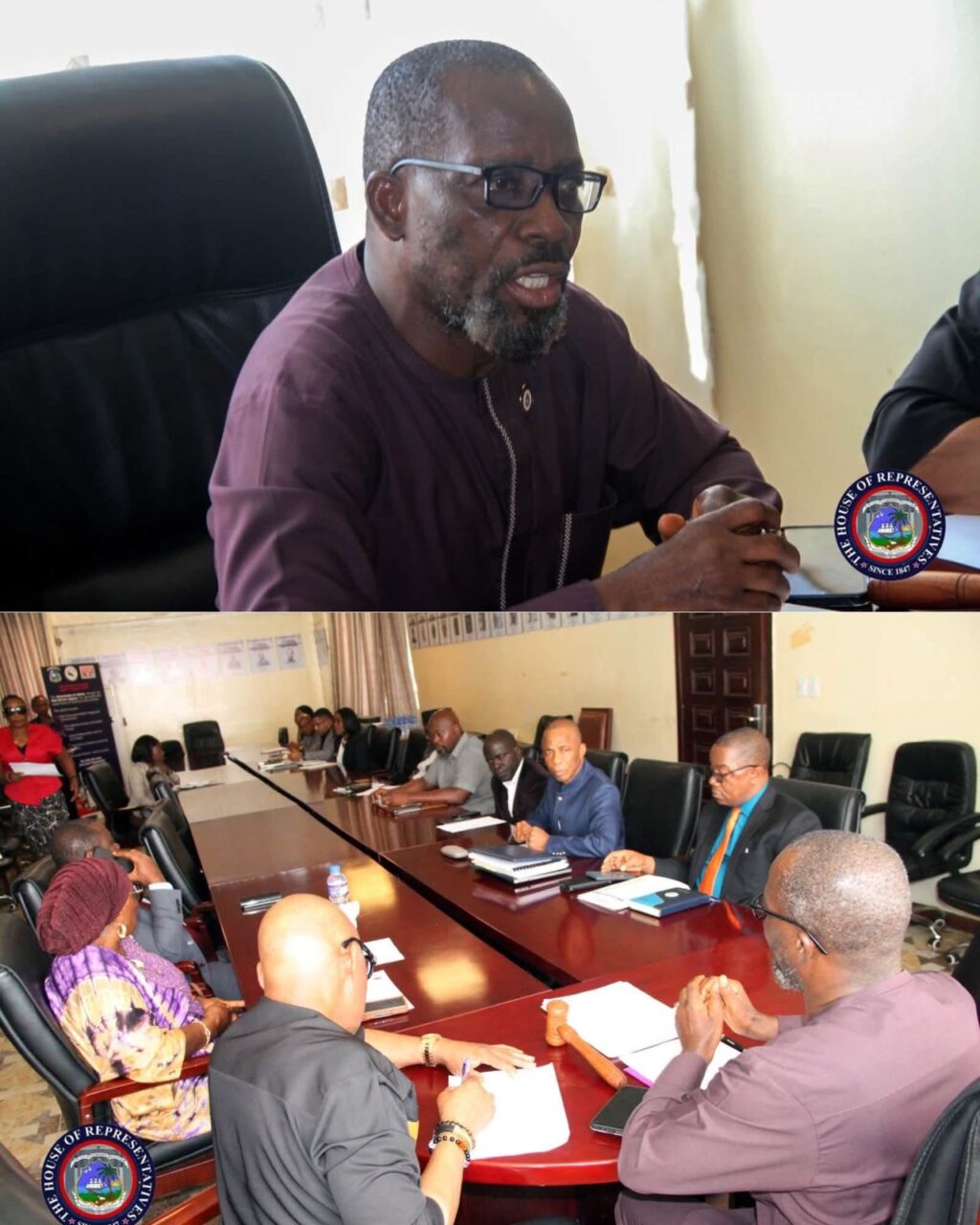
The call was made during the second phase of public hearings conducted by the House of Representatives Joint Committees on Mines, Energy and Natural Resources & Environment, Hydrocarbon, and Judiciary.
The hearing brought together representatives from key government institutions and stakeholders, including the Ministry of Mines and Energy, Environmental Protection Agency (EPA), Ministry of Finance and Development Planning, Central Bank of Liberia, Governance Commission, Law Reform Commission, and the Liberia Chamber of Mines.
The engagement focused on proposed reforms aimed at strengthening governance, improving regulatory systems, promoting responsible investment, and modernizing Liberia’s mining sector.
Opening the session, Chairman of the Joint Committee, Representative Jeremiah Gawo Sokan, said the review of the existing legal framework has become necessary due to changing realities within the mining industry, including climate change, environmental protection concerns, technological advancements, and the discovery of new strategic minerals.
Rep. Sokan said the committee’s objective is to support the development of a modern mining framework that responds to current realities while establishing a clear implementation timeline and identifying resources needed to carry out the reform process.
Representing the Ministry of Mines and Energy, Deputy Minister for Operations William Hines informed lawmakers that the Ministry conducted a technical assessment of the current Mining and Minerals Law and concluded that piecemeal amendments would not adequately address the sector’s evolving needs.
According to Deputy Minister Hines, the assessment identified several provisions requiring major revisions, making a comprehensive review of the law more appropriate than isolated amendments.
He said the Ministry has begun discussions with relevant partners on developing a new legal framework, emphasizing that reforms should strengthen government regulation while creating greater certainty for investors and improving Liberia’s competitiveness in attracting responsible mining investment.
Meanwhile, Deputy Minister for Finance and Development Planning Anthony Myers supported the call for a comprehensive review, stressing that the process should begin with the development of a national mining policy to guide future legislation.
Deputy Minister Myers also called for greater government ownership of the reform process, cautioning against excessive reliance on external financing for such an important national legal framework.
Representing the private sector, Liberia Chamber of Mines President Amara Kamara reaffirmed the Chamber’s position that Liberia should avoid limited amendments and instead pursue a broad review of the entire mining and regulatory framework.
Mr. Kamara said mining remains one of Liberia’s key economic pillars, with the potential to generate government revenue, create jobs, support infrastructure development, strengthen rural economies, expand exports, and attract responsible foreign investment.
The Liberia Chamber of Mines recommended that the review involve broad consultations with government institutions, the Legislature, mining companies, artisanal miners, host communities, civil society organizations, development partners, and investors.
Stakeholders further called for reforms that protect Liberia’s national interest, safeguard existing contractual rights, strengthen investor confidence, and align the country’s mining framework with international best practices.
At the conclusion of the hearing, participants reached consensus that Liberia’s Mining and Minerals Law require a comprehensive review rather than limited amendments.
The Joint Committee is expected to consolidate recommendations from the hearings and submit its report to the full Plenary of the House of Representatives for further legislative consideration.
About The Author