Disability Rights Activist Appeals to President Boakai for Creation of Special Presidential Adviser Role
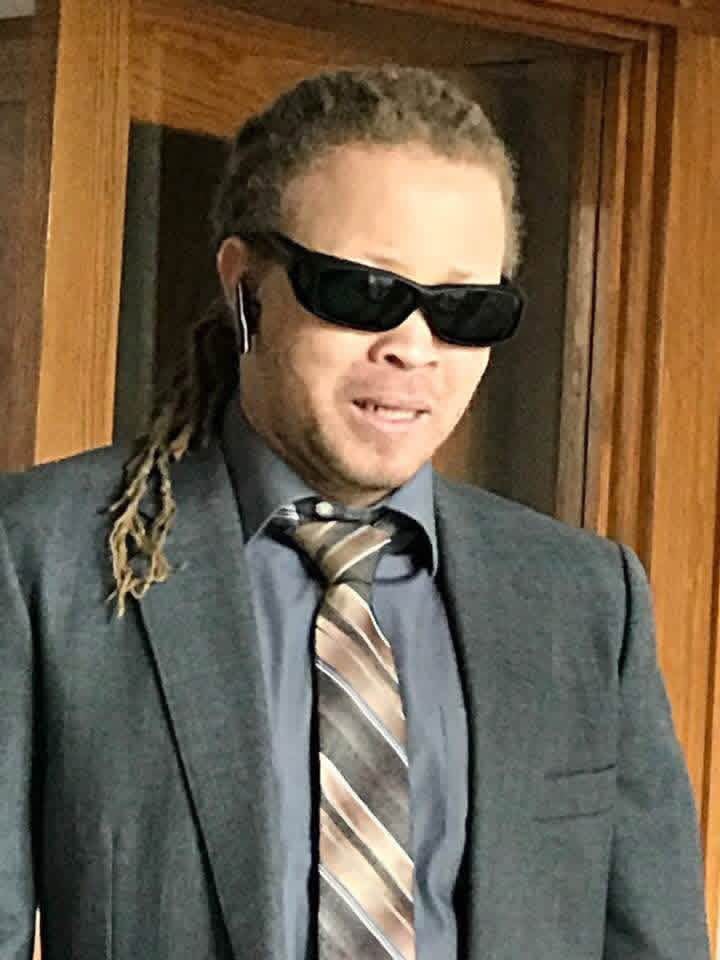
Monrovia, September 8,2026 — A Liberian disability rights activist has petitioned President Joseph Nyuma Boakai Sr. to create and fill a new position at the Executive Mansion: a Senior Special Assistant to the President on Special Needs and Equal Opportunities, arguing that the country’s disability policies remain scattered across government without a champion at the highest level of power.
In an open letter addressed to the President, activist Dakpannah U-Thant Nicholas Smith argues that Liberians living with disabilities make up a substantial share of the population, and that the burden falls hardest on the poorest. He cites figures showing that roughly one in ten Liberians live with a functional disability, according to recent analysis, while pointing out that some earlier international estimates — reflecting the lingering effects of the civil war and the Ebola epidemic — put the true number as high as 16 to 20 percent. One survey he references found that 99 percent of persons with disabilities in Liberia live in extreme poverty.
Smith’s letter also highlights how deeply cultural stigma continues to shape the disability experience in Liberia, describing a widespread tendency to treat disability “as a curse, witchcraft, or punishment” rather than as a matter of rights and development.
The activist acknowledges that Liberia has made genuine legal and policy progress, noting the country’s ratification of the UN Convention on the Rights of Persons with Disabilities (CRPD), the establishment of the National Commission on Disabilities, and the adoption of a National Action Plan on Disability. But he insists implementation has been “uneven and fragmented across ministries and agencies.” As evidence, the letter notes that the Ministry of Education’s Department of Science, Technical, Vocational and Special Education received just 0.28 percent of the ministry’s budget in the 2023 fiscal year, leaving most schools serving children with disabilities dependent on non-governmental and faith-based organizations for support.
Smith credits President Boakai with showing some commitment to inclusion already, pointing to the President’s engagement with deaf students and educators and his reaffirmed support for inclusive education. Still, he argues that without a dedicated adviser inside the Ministry of State for Presidential Affairs, those gains “risk being disjointed, under-resourced, and insufficiently aligned with the broader national agenda.”
The letter lays out a detailed mandate for the proposed role, including advising the President directly on disability-related policy, coordinating initiatives across ministries such as Education, Health, Gender, Labour and Justice, pushing for more realistic budget allocations for assistive devices and accessible infrastructure, strengthening national disability data collection with LISGIS and the National Commission on Disabilities, and serving as a formal liaison to organizations such as the National Union of Organizations of the Disabled and the Liberian National Association of the Deaf.
Smith notes that the President’s current roster of advisers already spans legal, youth, political, religious and security portfolios, but “no dedicated expert on disability inclusion” — a gap he says the new position would close.
Framing the appointment as more than a bureaucratic addition, Smith writes that it would send “a clear moral and symbolic message” that persons with disabilities are “rights-holders and citizens whose perspectives must shape the national agenda,” rather than being viewed as charity cases. He argues such a move would also bring Liberia’s domestic practice more closely in line with its obligations under the CRPD and the African Charter on Human and Peoples’ Rights.
The letter closes with a direct appeal to the Executive Mansion to act — whether through executive action, consultation with the Minister of State for Presidential Affairs, or engagement with disability organizations and the National Commission on Disabilities — to formally establish the post.
As of this report, the Executive Mansion had not issued a public response to the appeal.
About The Author